
EIN Number Meaning in Simple Words 2026
The EIN number meaning refers to a unique identification number issued by the IRS to businesses and organizations.
In simple terms:
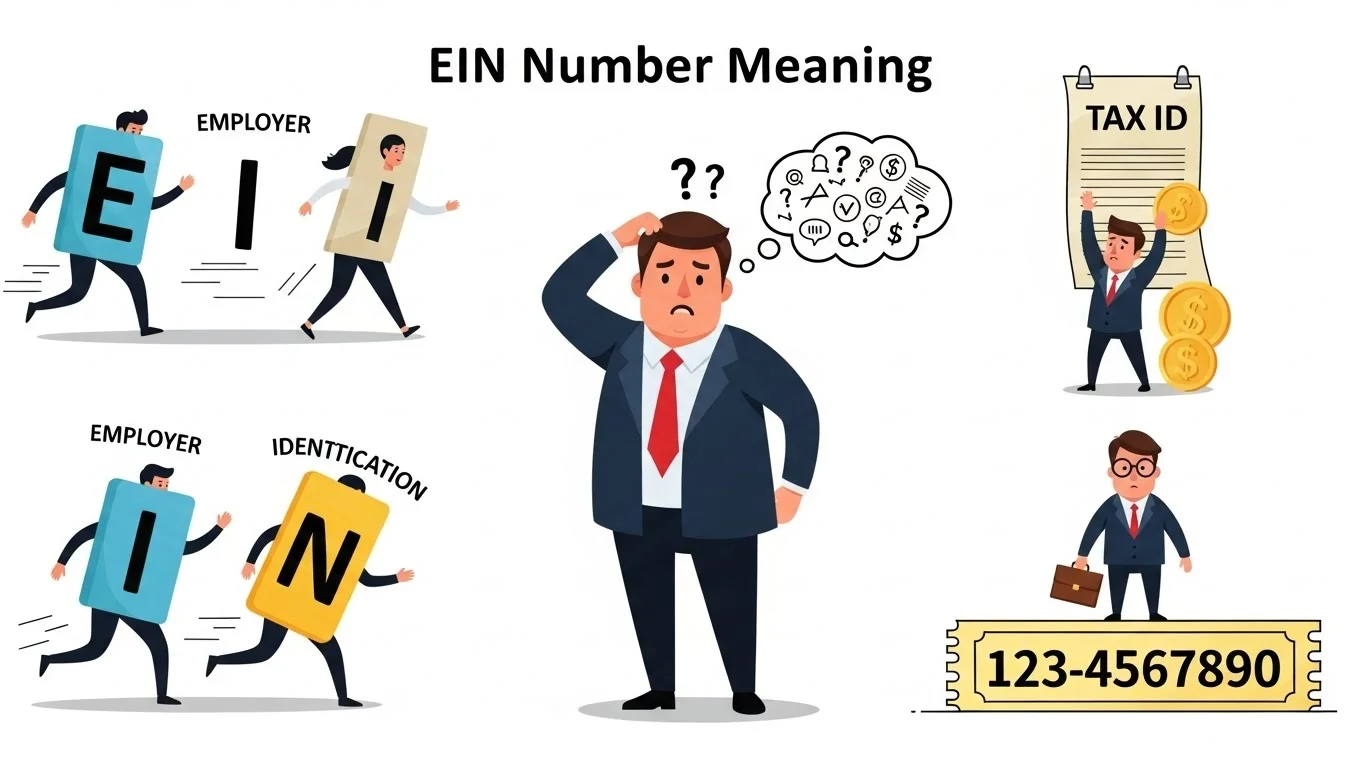
EIN stands for Employer Identification Number
It is like a Social Security number for a business
It helps the government track taxes
An EIN does not belong to a person, but to a business entity.
What Does EIN Stand For 2026
EIN stands for Employer Identification Number.
Key points:
Issued by the Internal Revenue Service (IRS)
Used mainly in the United States
Also called a Federal Tax Identification Number
Even businesses without employees may need an EIN.
Why an EIN Number Is Important 2026
An EIN is important because it is required for many business activities.
Uses include:
Filing business taxes
Hiring employees
Opening a business bank account
Applying for business licenses
Without an EIN, many legal and financial processes are not possible.
Who Needs an EIN Number 2026
Not every individual needs an EIN, but many businesses do.
You usually need an EIN if you:
Run a corporation or partnership
Have employees
Operate as an LLC with more than one member
Withhold taxes
Some sole proprietors may also need one.
EIN Number Meaning for Small Businesses 2026
For small businesses, an EIN provides legitimacy and structure.
Benefits include:
Separating personal and business finances
Protecting personal Social Security numbers
Making tax filing easier
It helps small businesses operate professionally.
EIN Number Meaning for Nonprofits and Organizations 2026
Nonprofits and organizations also require an EIN.
Examples:
Charities
Trusts
Estates
Religious organizations
An EIN is needed to apply for tax-exempt status.
EIN Number vs Social Security Number 2026
EIN Number:
Used for businesses and organizations
Issued by the IRS
Social Security Number:
Used for individuals
Linked to personal identity
They serve different purposes and should not be confused.
How an EIN Number Is Used in Real Life 2026
Common real-life uses include:
Filing annual tax returns
Paying employee wages
Completing legal documents
Working with vendors and banks
The EIN acts as the official ID for the business.
Common Mistakes About EIN Number Meaning 2026
Common mistakes include:
Thinking EINs are only for large companies
Using a personal SSN instead of an EIN
Believing an EIN gives tax-exempt status automatically
Understanding the role of an EIN avoids legal trouble.
Why EIN Numbers Matter More in 2026
EIN numbers matter more today because:
More people are starting online businesses
Digital banking requires proper identification
Tax systems are becoming more automated
Having an EIN ensures smoother operations.