
What Does “Idiot” Mean?
Idiot is a noun used to describe:
A person who acts foolishly or makes poor decisions.
Someone perceived as lacking intelligence or common sense.
Simple definition:
Idiot = a person acting in a silly, foolish, or unintelligent way.
Example:
“Only an idiot would forget their wallet at home before a big meeting.”
Origin of the Word “Idiot”
Derived from Greek word “idiotes”, meaning a private citizen or someone not engaged in public affairs.
In Medieval Latin, it evolved to mean ignorant or unskilled person.
By the 14th century in English, “idiot” referred to someone mentally deficient, but today it’s used more loosely.
Idiot Meaning in Simple Words
Refers to foolishness, not necessarily permanent intelligence.
Can be playful, insulting, or descriptive, depending on tone.
Common in casual conversations and online chats.
Example:
“Don’t be an idiot meaning —check the weather before leaving!”
Idiot Meaning in Everyday Conversation
Joking: Friends might tease each other casually.
“You’re an idiot for trying to cook without instructions!”
Serious insult: Can express frustration or anger.
“He acted like an idiot during the meeting.”
Self-deprecating: People sometimes call themselves an idiot.
“I’m such an idiot—I left my phone at home again.”
Idiot in Online and Social Media Culture
Widely used in memes, posts, and gaming chats.
Often playful, exaggerating silly mistakes or funny fails.
Can express annoyance with someone’s behavior in forums or threads.
Example:
“When your teammate misses the goal… total idiot moment.”
Real-Life Examples of Idiot
“He was an idiot to leave the keys in the car.”
“Calling him an idiot might be harsh, but he forgot the project deadline.”
“I felt like an idiot when I tripped in front of everyone.”
“Only an idiot would ignore safety instructions.”
“She laughed at her own idiot mistake during the quiz.”
Common Misunderstandings About Idiot
Not always permanent: Using “idiot” doesn’t mean the person is unintelligent forever.
Tone matters: Can be playful or insulting depending on context.
Not clinical: Modern usage is informal; it no longer refers to medical mental health diagnoses.
Idiot in Literature and Media
Appears in books, movies, and plays to show characters acting foolishly.
Can create humor, tension, or character development.
Often paired with sarcasm or exaggeration.
Example:
“In the sitcom, the character’s idiot actions caused chaos but made everyone laugh.”
Idiot in Popular Phrases
“Only an idiot would…” – Highlights poor decision-making
“Feel like an idiot” – Expresses self-embarrassment
“Complete idiot” – Stronger version of calling someone foolish
“Don’t be an idiot” – Friendly or warning advice
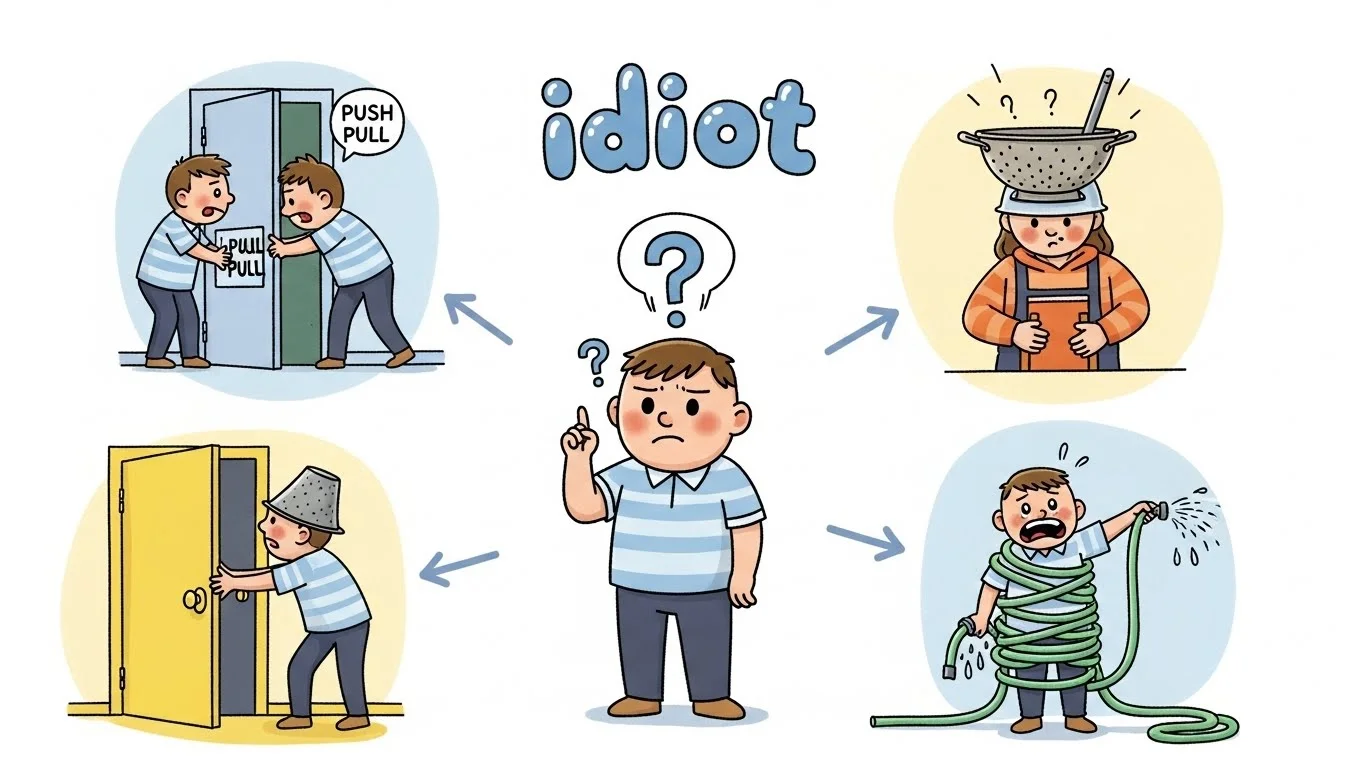
Related Words
Fool: Someone lacking good judgment
Dunce: Person slow to learn
Moron: Slightly stronger insult than idiot
Nitwit: Playful term for someone acting silly