

Misandrist Meaning in English
In English, a “misandrist” is a person who dislikes, hates, or is strongly prejudiced against men. The term comes from discussions about gender bias and social attitudes.
Opposite of Misandrist
The opposite of a misandrist is generally considered a “misogynist.”
- Misandrist → prejudice against men
- Misogynist → prejudice against women
Both terms describe gender-based hostility.
Misandrist vs Feminist
A misandrist and a feminist are not the same thing.
- Feminism is a movement focused on gender equality and women’s rights.
- Misandry refers to hatred or prejudice against men.
A feminist supports equality, while a misandrist expresses bias or hostility toward men.
Misandrist Pronunciation
“Misandrist” is pronounced as:
“mis-AN-drist” (/mɪˈsændrɪst/)
The stress is on the second syllable: AN.
Misandrist and Misogynist Meaning
- Misandrist → someone who dislikes or discriminates against men
- Misogynist → someone who dislikes or discriminates against women
These terms are opposites in terms of gender focus.
Misandrist Meaning AI
In discussions about Artificial Intelligence, “misandrist AI” may refer to claims that an AI system shows bias against men. This is usually part of broader debates about fairness, data bias, and algorithmic behavior.
Misandrist Meaning Etymology
The word “misandrist” comes from Greek roots:
- “misos” → hatred
- “aner/andros” → man
Together, the term literally means “hatred of men.”
Synonyms of Misandrist
Some related or similar terms include:
- Anti-male
- Man-hating
- Sexist against men
- Prejudiced against men
These words express similar ideas, though “misandrist” is the most formal term.
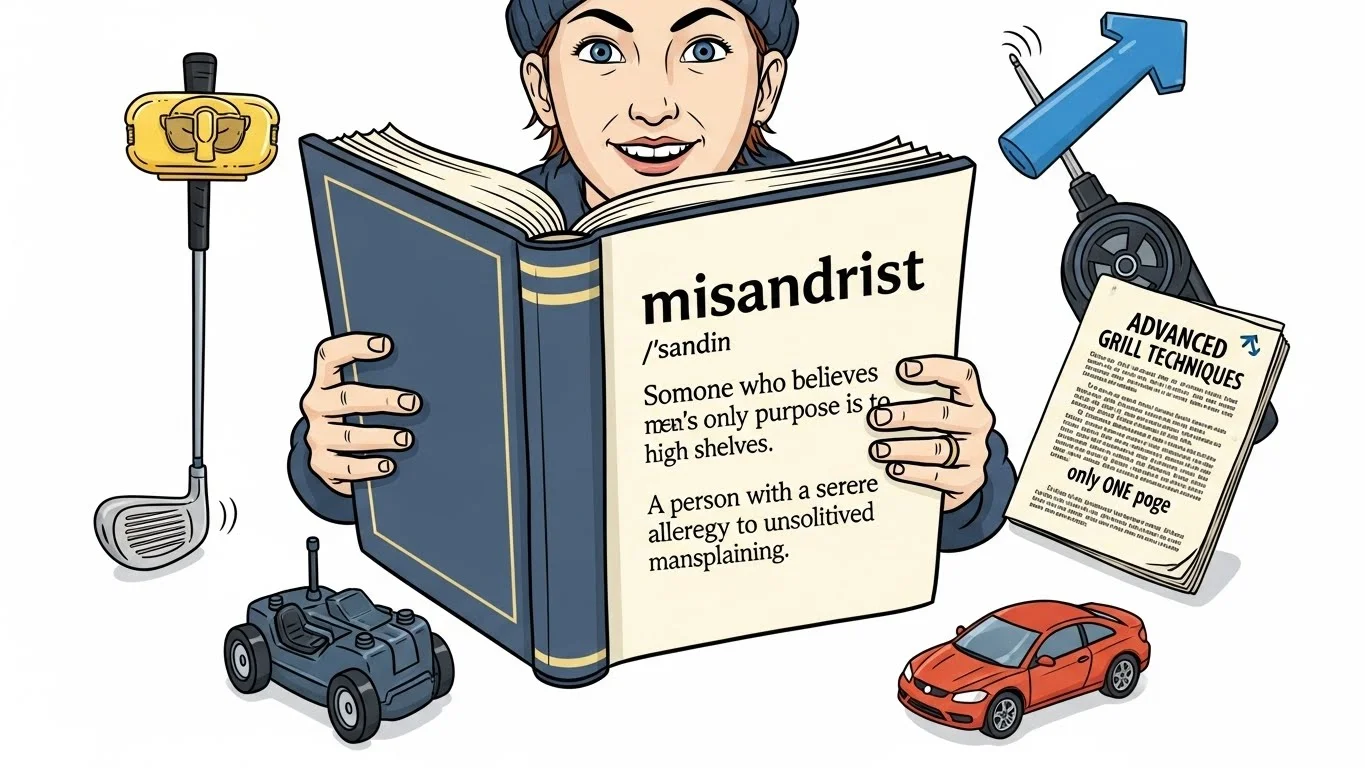
What Does “Misandrist” Mean?
Misandrist is a noun or adjective used to describe:
A person who dislikes or is prejudiced against men.
Behaviors, statements, or attitudes that express anti-male sentiment.
In simple terms: misandrist = someone who harbors negativity or bias against men.
Misandrist Meaning in Simple Words
A misandrist may make derogatory statements about men.
The term is the opposite of misogynist, which refers to dislike or prejudice against women.
Misandrist attitudes can appear in jokes, social media posts, or personal beliefs.
Example:
“Calling all men incompetent just because of their gender is a misandrist attitude.”
Origin of the Word “Misandrist”
Greek roots: mis- (hatred) + anēr, andros (man)
First used in English in the mid-19th century.
Developed alongside terms like misogyny (hatred of women) to describe gender-based prejudice.
Misandrist Behavior Examples
Claiming all men are bad or violent.
Making jokes that demean men as a group.
Preferring policies or rules that unfairly discriminate against men.
Writing social media posts that generalize negativity about men.
Avoiding interactions with men purely because of their gender.
Misandrist Meaning in Everyday Life
Casual conversations: Comments like “Men can’t multitask” can reflect subtle misandrist bias.
Online discussions: Memes or threads generalizing men negatively.
Media or entertainment: Portraying men consistently as incompetent or harmful.
Misandrist vs. Misogynist
| Term | Meaning | Target |
|---|---|---|
| Misandrist | Dislike or prejudice against men | Men |
| Misogynist | Dislike or prejudice against women | Women |
Both are forms of gender-based prejudice, but in opposite directions.
Misandrist Meaning in Psychology
Viewed as a form of prejudice or bias.
Can impact personal relationships, workplace dynamics, and social interactions.
Recognizing misandrist attitudes helps promote gender equality and understanding.
Common Misunderstandings About Misandrist
Not all criticism of men is misandrist: Critiquing behavior is different from gender-based hatred.
Misandrist is not the same as feminism: Feminism advocates equality, not hatred of men.
Not a joke term: Repeated negative generalizations about men may reflect bias.
Real-Life Examples of Misandrist Statements
“Men are naturally bad drivers.”
“I refuse to work with men because they’re unreliable.”
“All men are selfish and arrogant.”
“Men can’t raise children properly.”
“Why do men even exist?” (extreme example, clearly biased)
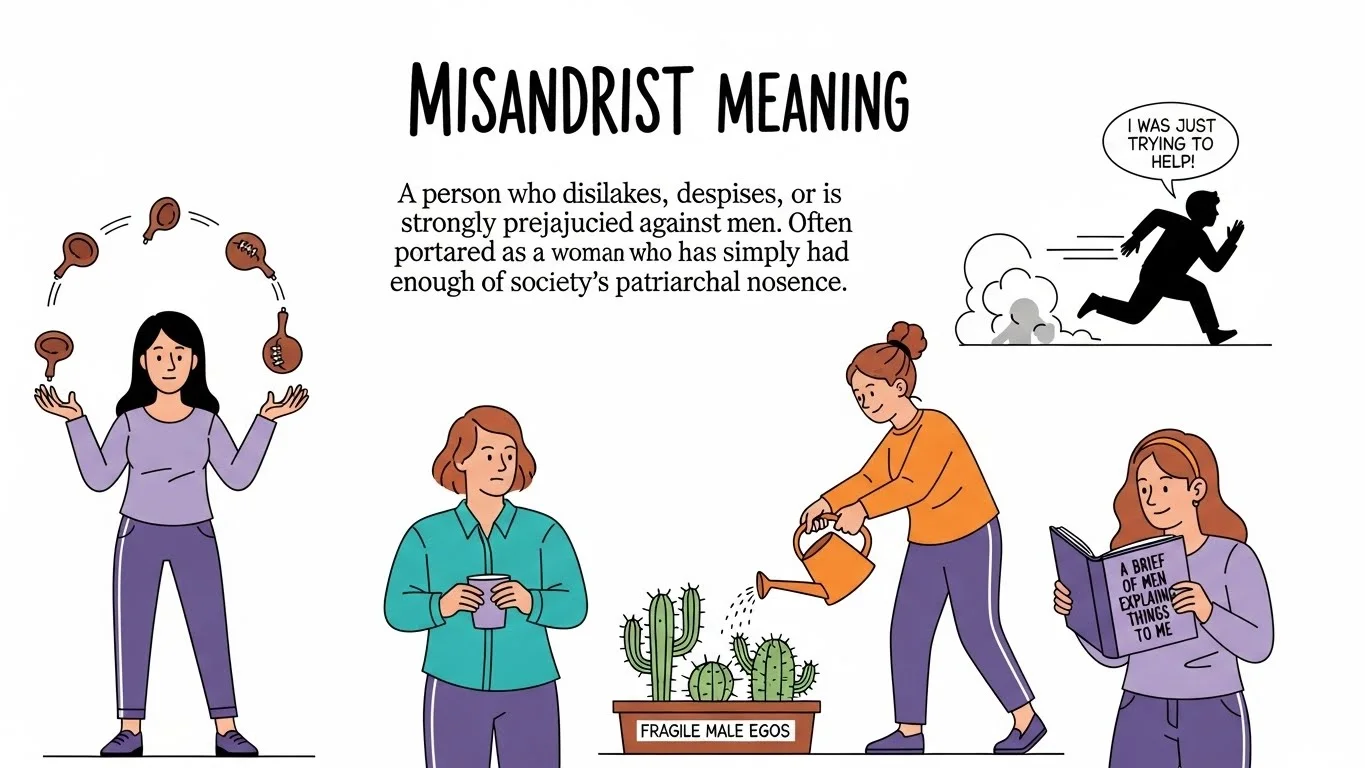
Related Terms
Misogyny: Hatred or prejudice against women
Sexism: Discrimination based on gender
Gender bias: Unequal treatment of individuals based on gender
Misandry: The ideology or practice of being misandrist