


What Does “Dual Enrollment” Mean?
Dual enrollment meaning is a program that allows high school students to enroll in college courses while still completing their high school education.
Simple definition:
Dual enrollment = taking high school and college courses at the same time to earn credit for both.
Dual Enrollment Meaning in Simple Words
Students attend classes at a college or online while still in high school
Earn both high school and college credit for the same course
Helps students get a head start on college education
Often includes general education courses or advanced subjects
Example:
“She participated in dual enrollment, taking calculus at the local college while in 11th grade.”
History and Origin of Dual Enrollment
Started in the United States in the 1970s to accelerate college readiness
Expanded to high-achieving or motivated students nationwide
In 2026, many schools and colleges have formal dual enrollment programs
Benefits of Dual Enrollment
Earn College Credit Early: Reduces the time and cost of college education
Explore Academic Interests: Try college-level courses in various subjects
Boost College Applications: Shows initiative and academic readiness
Experience College Environment: Prepares students for independent learning
Save Time and Money: Complete some college requirements while in high school
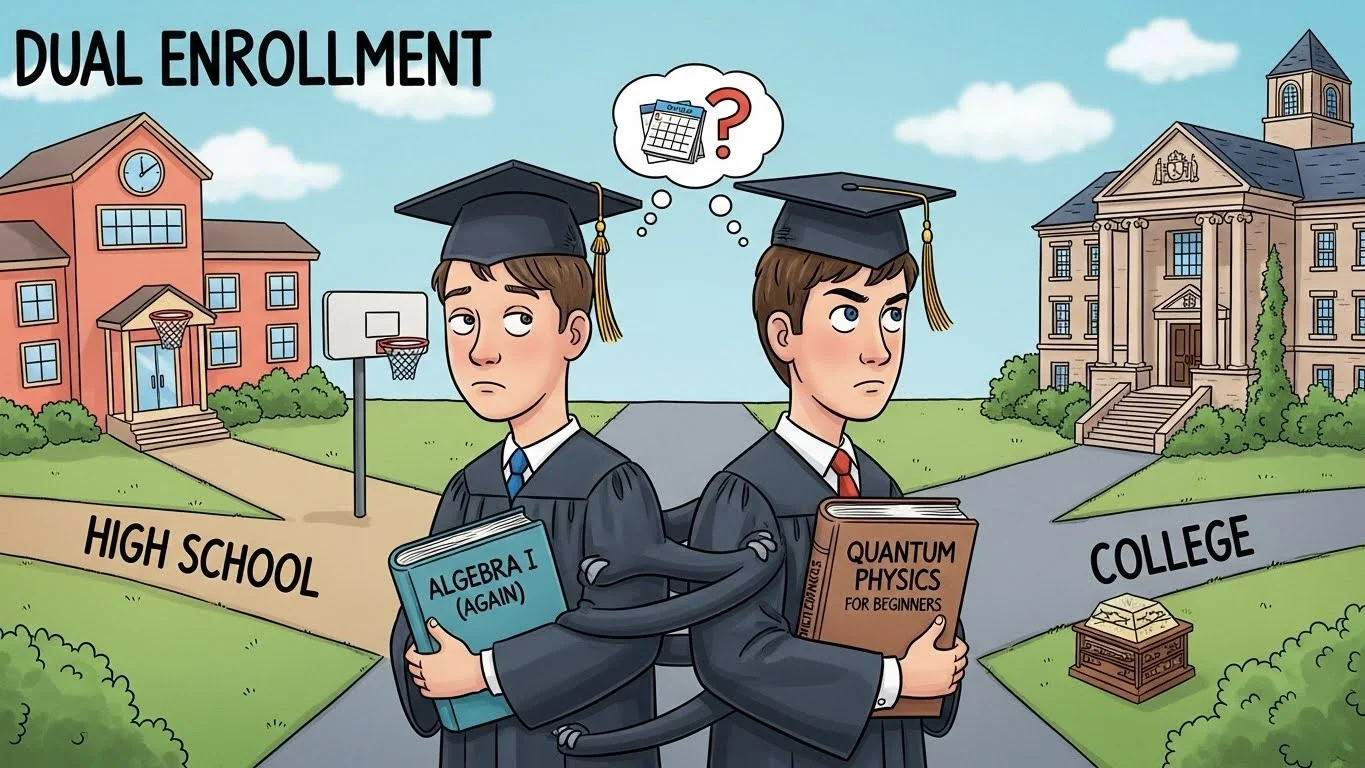
How Dual Enrollment Works
Students must meet eligibility requirements, such as GPA or test scores
Courses can be taken:
At a local college or university
Online through approved platforms
On the high school campus via visiting college instructors
Credits earned count toward high school graduation and college credit
Example:
“He took dual enrollment English 101 online, which counted for both his high school English credit and college credit.”
Dual Enrollment Meaning in Different Contexts
Academic Context: Students earn advanced knowledge and college credits
Career Context: Provides exposure to specialized courses for future careers
Financial Context: Helps families reduce college costs by earning credit early
Common Misunderstandings About Dual Enrollment
Dual enrollment is not just for top students; many schools offer programs for motivated students
Credits may not transfer to all colleges—check college policies
It’s not the same as Advanced Placement (AP) courses, though both provide college-level learning
Dual Enrollment vs Advanced Placement
| Dual Enrollment | AP Courses | |
|---|---|---|
| Credit | Earn actual college credit if passed | Earn college credit only if passing AP exam |
| Location | College or online | High school |
| Instructor | College professor or approved teacher | High school teacher |
| Flexibility | Often transferable | Depends on AP exam score and college policy |
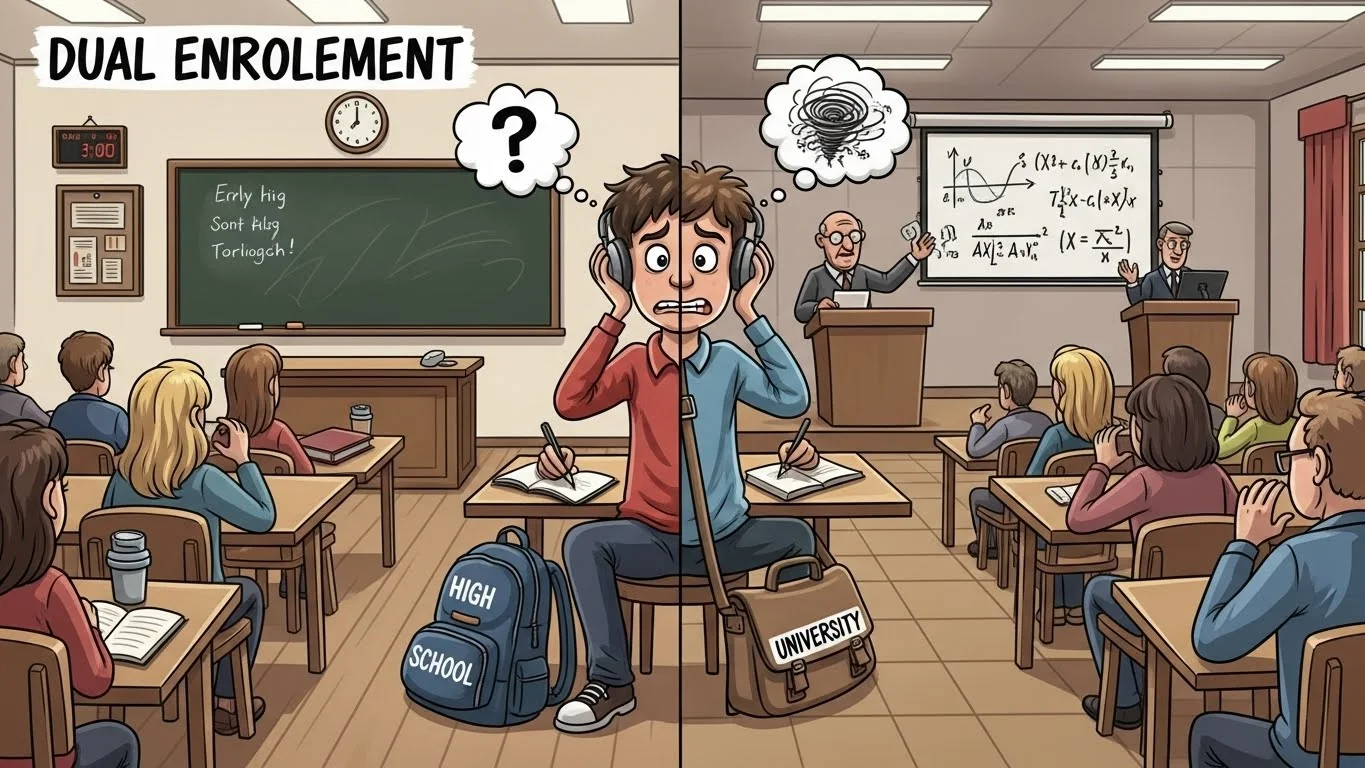
Related Terms and Concepts
Concurrent Enrollment: Another term for dual enrollment in some states
Early College Program: A dual enrollment program allowing high school students to earn an associate degree
Dual Credit: College credits that count toward both high school and college
College Readiness: Preparation to succeed in college-level courses