
What Does “Exacerbation” Mean?
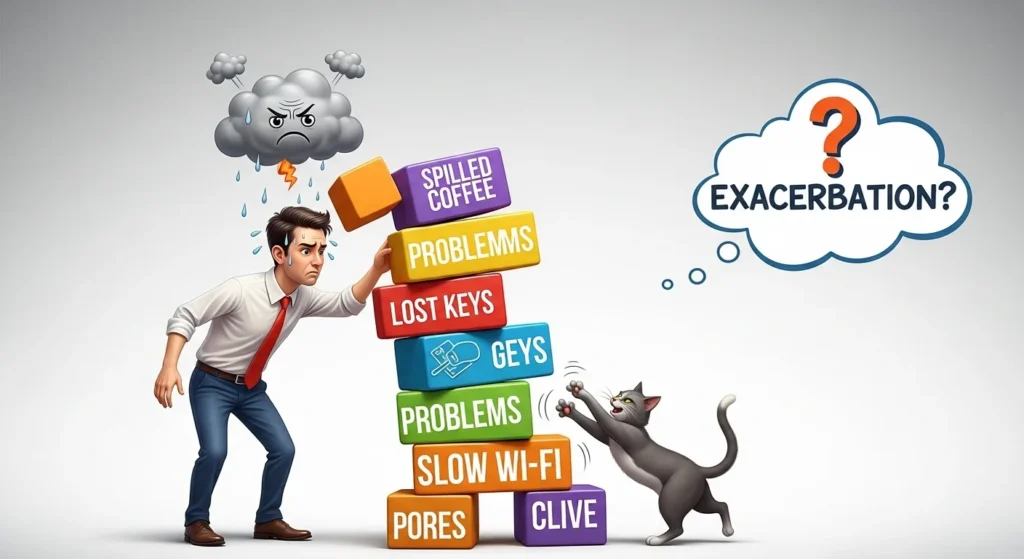
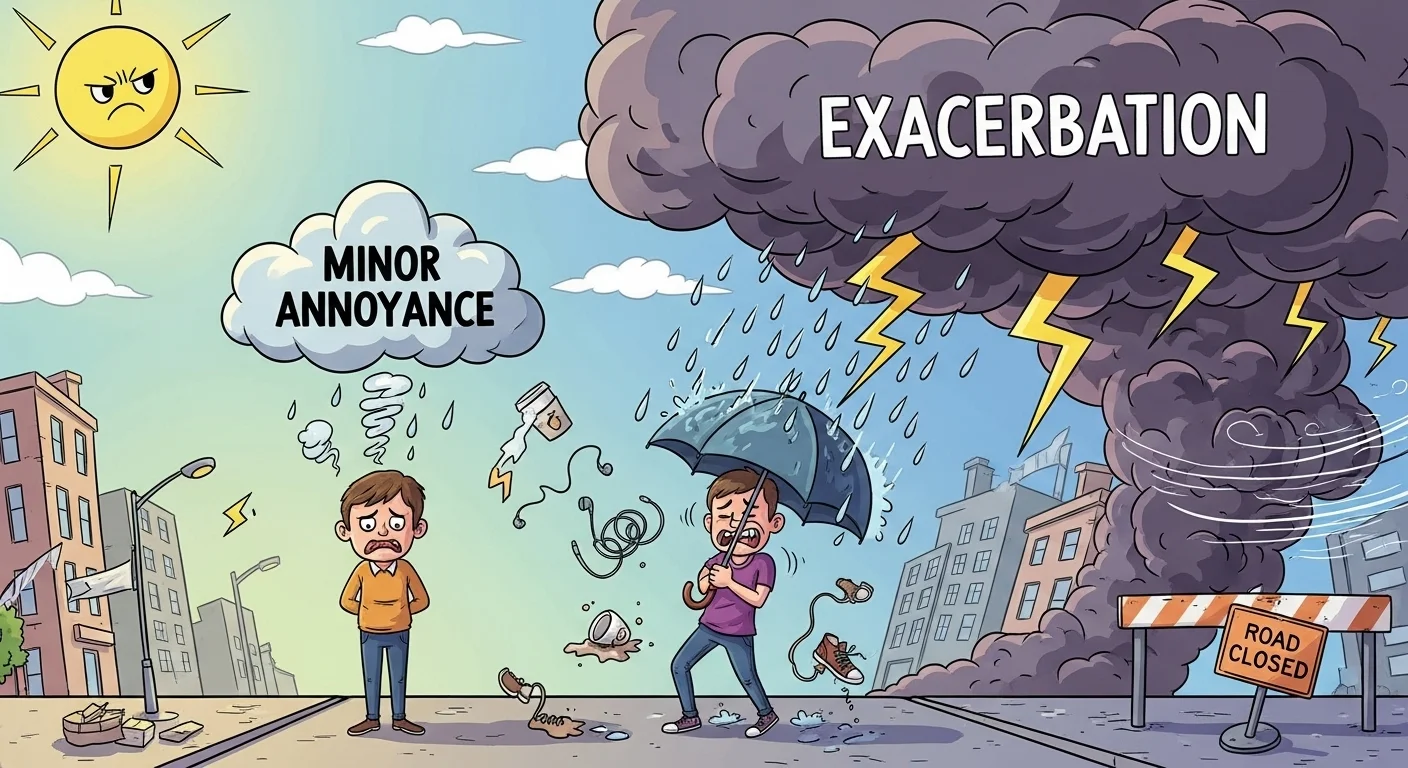
Exacerbation meaning a worsening of an existing problem, condition, or situation.
If something is already negative and another factor increases its severity, that situation is described as an exacerbation.
Clear definition
Exacerbation = an increase in how bad something already is
This word is most often used in:
Medical language
Formal writing
News reporting
Academic or professional discussions
Word origin
Exacerbation comes from the Latin word exacerbare, meaning to make harsher or more severe. Over time, the word became associated with worsening conditions rather than new problems.
Exacerbation Meaning in Everyday Language
In everyday language, exacerbation simply means:
Made the problem worse
Increased the difficulty
Intensified an issue
Everyday examples
Lack of sleep exacerbated his stress
Her tone exacerbated the disagreement
Traffic delays were exacerbated by heavy rain
People may not always say the word out loud, but it’s common in writing where clarity and accuracy matter.
Exacerbation Meaning in Medical Contexts
Medical usage is where this word appears most frequently.
In healthcare, an exacerbation refers to a noticeable worsening of symptoms, especially in long-term or chronic conditions.
Common medical phrases
Asthma exacerbation
COPD exacerbation
Anxiety exacerbation
Chronic pain exacerbation
Skin condition exacerbation
Simple medical explanation
An exacerbation happens when symptoms become more severe after being stable or controlled.
For example:
Cold air can cause an asthma exacerbation
Stress can lead to an anxiety exacerbation
Doctors use this word to clearly explain changes in symptom severity.
Exacerbation Meaning in News and Formal Writing
In news articles and analytical writing, exacerbation is often used to show how one problem worsens another.
Common examples
Inflation exacerbates poverty
Climate change exacerbates food shortages
Social media exacerbates mental health issues
Here, the word highlights cause-and-effect relationships and signals that conditions have intensified.
How People Use “Exacerbation” in Real Conversations
Although it sounds formal, people do use exacerbation in spoken conversation — especially in serious or professional discussions.
Natural situations
Talking about health conditions
Workplace meetings
Academic discussions
Policy or social issue debates
Less natural situations
Casual texting
Friendly chats
Informal social media comments
In relaxed conversations, people usually say “made it worse” instead.
Real-Life Examples of “Exacerbation” Explained
Example 1:
“The stress caused an exacerbation of her symptoms.”
Explanation: The symptoms already existed, but stress made them worse.
Example 2:
“His response exacerbated the conflict.”
Explanation: Instead of calming the situation, his reaction increased tension.
Example 3:
“Poor weather led to an exacerbation of travel delays.”
Explanation: Delays increased because conditions became worse.
Example 4:
“Sleep deprivation often causes an exacerbation of anxiety.”
Explanation: Anxiety becomes more severe due to lack of rest.
Exacerbation vs Similar Words
Understanding similar terms helps clarify meaning.
Exacerbation vs Aggravation
Exacerbation: Worsening of an existing condition
Aggravation: Making something worse or more irritating
Exacerbation vs Escalation
Exacerbation: Increase in severity
Escalation: Increase in seriousness or scale
Exacerbation vs Flare-Up
Exacerbation: Formal or medical term
Flare-up: Casual, conversational alternative
Related Words and Expressions
These related terms often appear alongside exacerbation meaning and are useful for internal linking:
Worsen – become more severe
Aggravate – make worse
Intensify – increase strength
Deterioration – gradual decline
Complication – added difficulty
Flare-up – sudden increase in symptoms
Why Understanding “Exacerbation” Matters in 2026
As more people:
Read medical content online
Manage chronic health conditions
Consume long-form news
Learn English globally
Knowing the exacerbation meaning helps prevent misunderstanding. It clearly signals that an existing issue has worsened, not that something new has begun.
How to Use “Exacerbation” Correctly in Writing
Writing tips
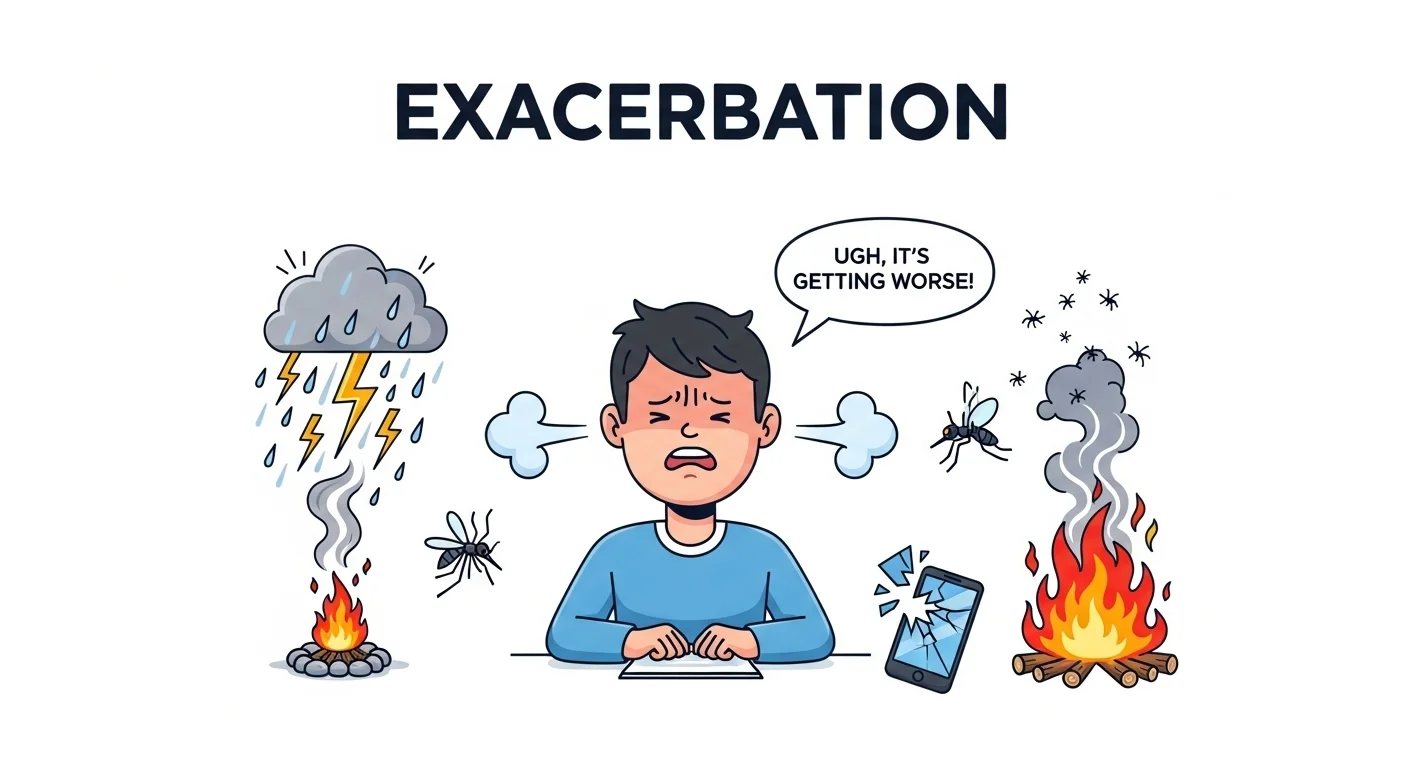
Use it only for existing problems
Clearly mention the cause
Keep it out of casual conversation
Sentence structure
Cause + exacerbated + condition
Example:
Poor diet exacerbated the condition.