
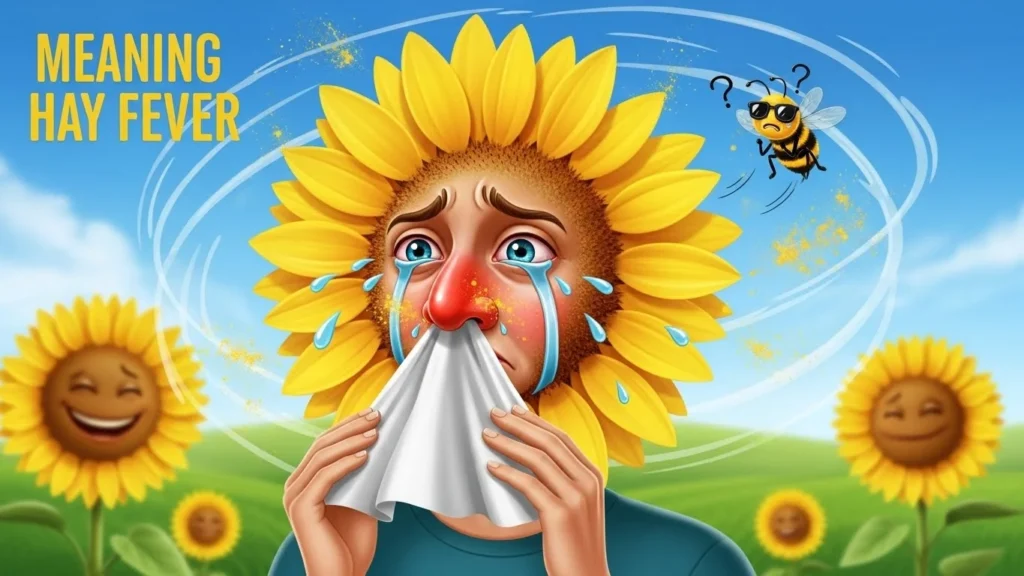
What Does “Hay Fever” Mean?
Hay fever is:
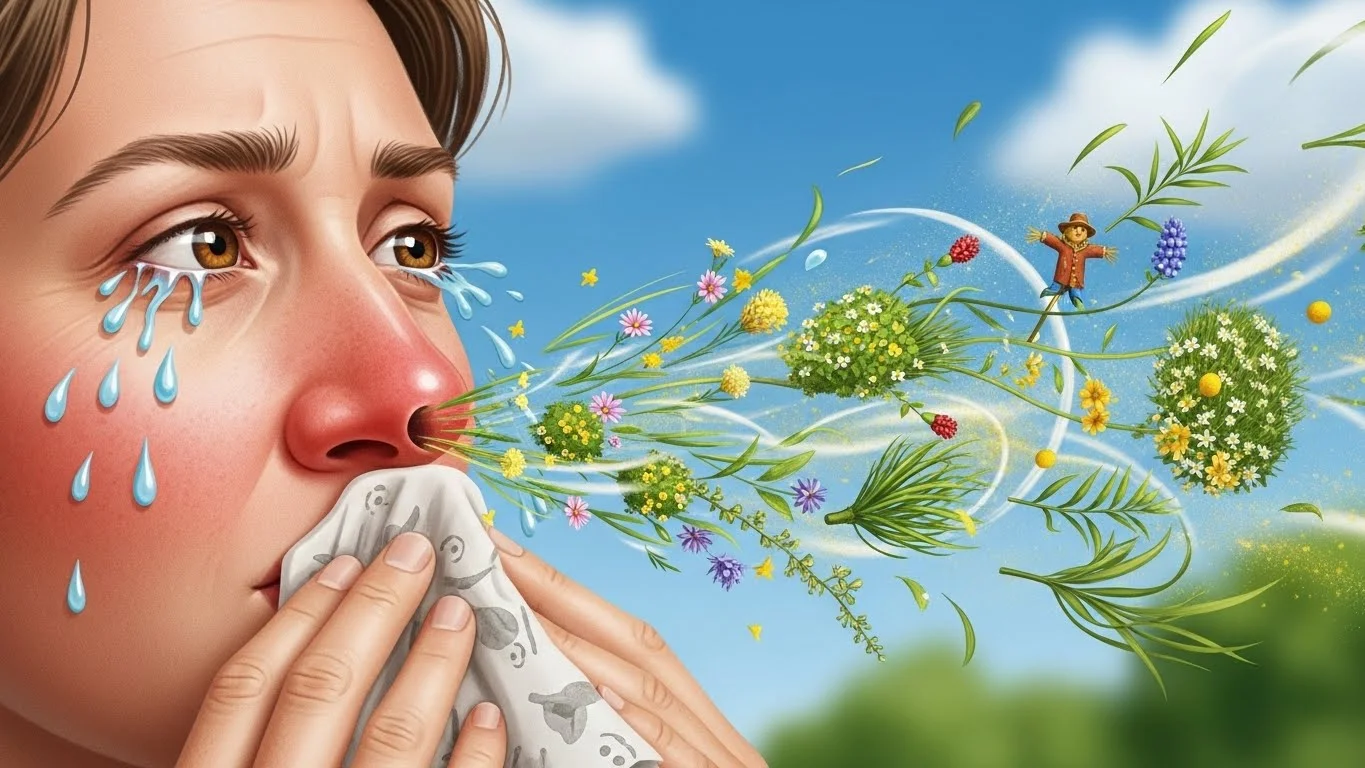
An allergic reaction to pollen, dust, or mold
Also called allergic rhinitis in medical terms
Symptoms often occur seasonally, especially in spring or summer
Simple definition:
Hay fever = seasonal allergy causing sneezing, runny nose, and itchy eyes.
Hay Fever Meaning in Simple Words
Simply put:
Your body overreacts to harmless substances like pollen
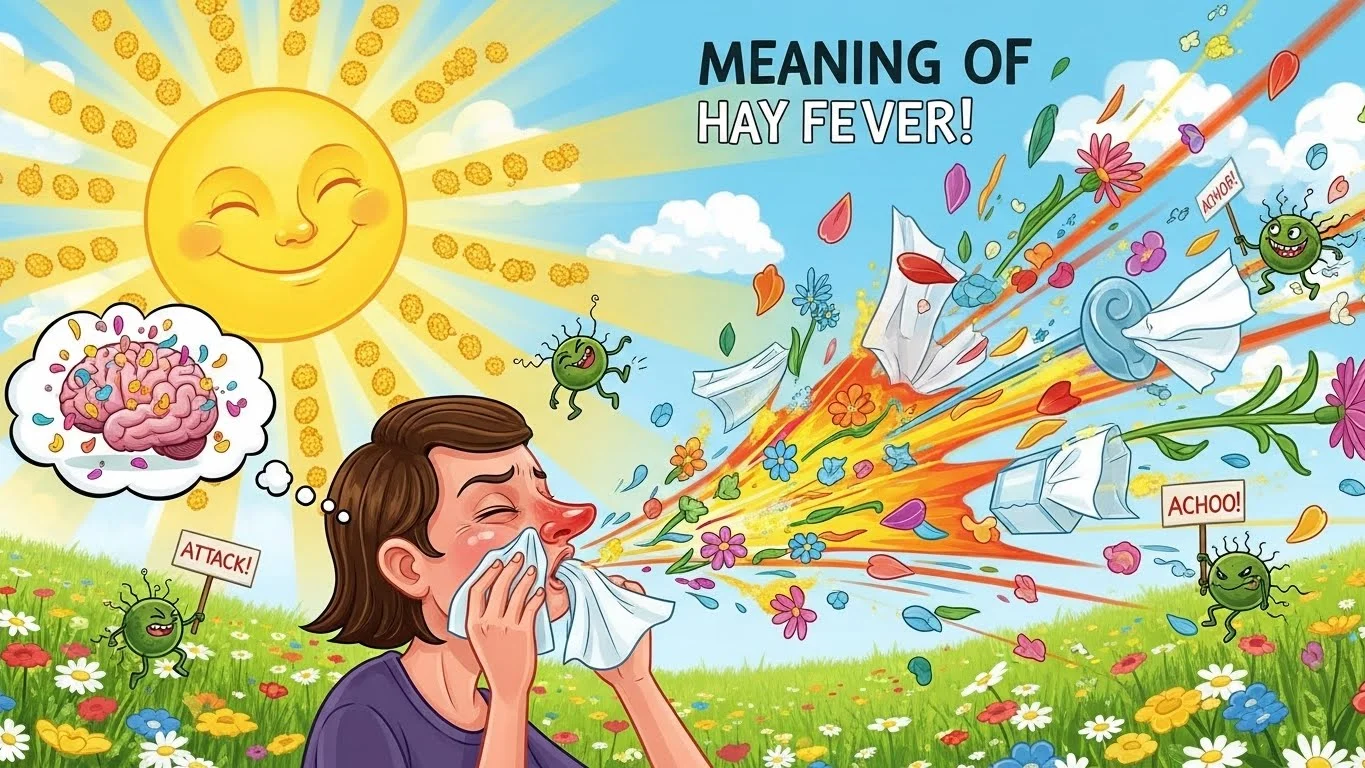
The immune system treats pollen as dangerous, triggering allergy symptoms
Example: “I get hay fever every spring when flowers bloom.”
Causes of Hay Fever
The main causes include:
Pollen from grasses, trees, and flowers
Mold spores in damp areas
Dust mites in homes
Pet dander
The immune system mistakes these for harmful substances, causing allergic reactions.
Symptoms of Hay Fever
Common hay fever symptoms are:
Sneezing
Runny or blocked nose
Itchy or watery eyes
Itchy throat or ears
Fatigue or mild headaches in severe cases
Tip: Symptoms worsen during pollen seasons or in areas with high allergens.
Hay Fever Meaning in Medical Terms
Known as allergic rhinitis
Non-life-threatening but can affect daily activities, sleep, and work
Doctors may prescribe antihistamines, nasal sprays, or eye drops for relief
Seasonal vs Perennial Hay Fever
Seasonal hay fever: Occurs during pollen seasons (spring/summer)
Perennial hay fever: Year-round, triggered by dust, mold, or pet dander
Understanding the type helps manage symptoms effectively.
Hay Fever Meaning in Everyday Life
Common among children and adults
Can impact school, work, and outdoor activities
Often confused with common cold, but hay fever is allergy-based, not viral
How to Prevent Hay Fever
Tips for reducing exposure:
Check pollen forecasts and stay indoors during high pollen times
Keep windows closed and use air conditioning
Shower and change clothes after being outdoors
Use HEPA filters in home ventilation systems
Treatment Options for Hay Fever
Antihistamines: Reduce sneezing and itching
Nasal sprays: Reduce inflammation in nasal passages
Eye drops: Relieve itchy or watery eyes
Immunotherapy: Allergy shots for long-term relief
Hay Fever Meaning in Children
Children may develop:
Sneezing, coughing, or runny nose
Itchy eyes or skin rash
Early recognition helps prevent severe allergic reactions
Hay Fever Meaning in Adults
Adults may experience:
Fatigue from disturbed sleep
Reduced productivity at work
Seasonal flare-ups during outdoor activities
Common Misunderstandings About Hay Fever
Not caused by hay or fever (the name is misleading)
Not contagious
Often mistaken for cold or flu, but it’s allergy-based
Hay Fever Meaning in Modern 2026 Context
Awareness of air quality and pollen levels is growing
Online tools and apps help track pollen counts
Over-the-counter medications and treatments are widely available
Hay Fever Meaning in Lifestyle
Manage diet and exercise to reduce inflammation
Use protective gear like sunglasses and masks during pollen season
Plan outdoor activities during low pollen times