

What Does “Kenya” Mean?
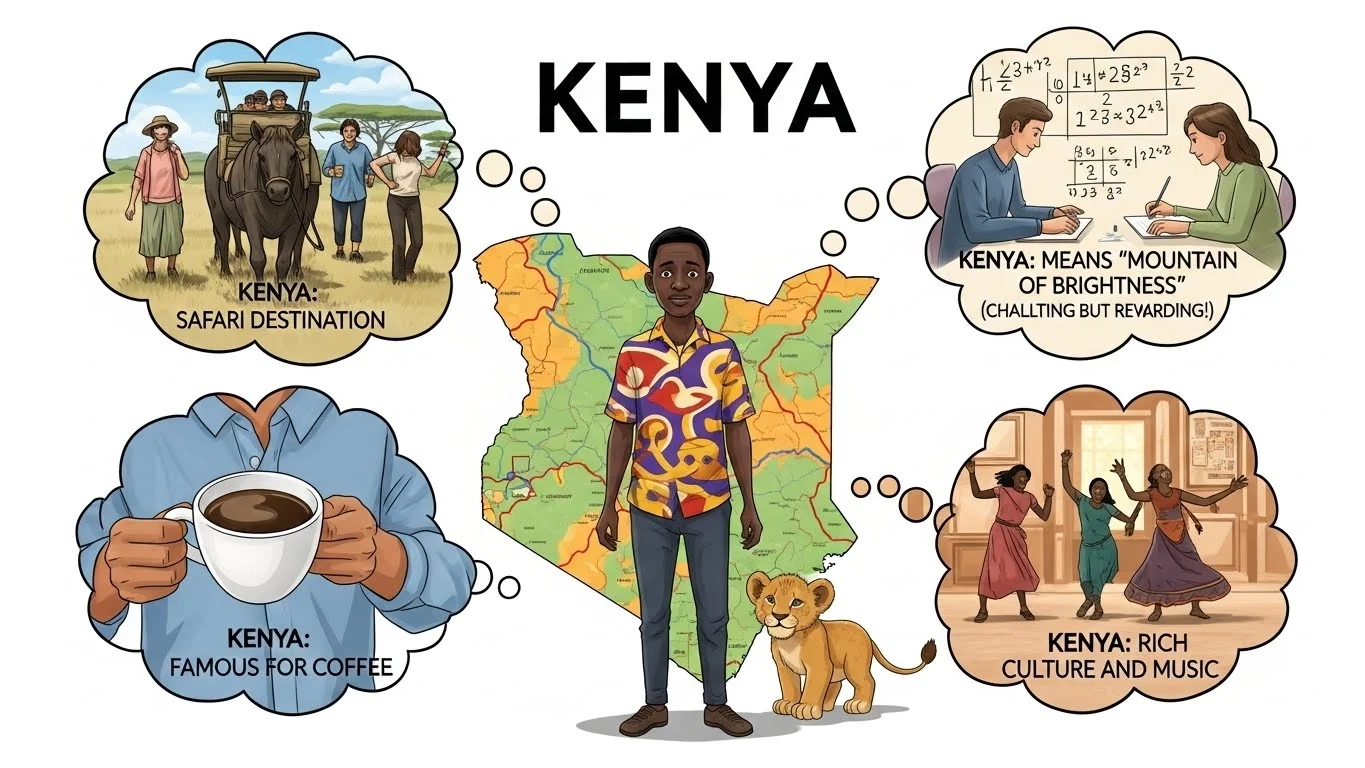
The name Kenya meaning is believed to have originated from Mount Kenya, the country’s highest peak.
Origin: The Kikuyu people called the mountain “Kirinyaga”, meaning “mountain of whiteness” because its snow-capped peak shines in the sun.
Over time, European explorers adapted the name to Kenya, which eventually became the official name of the country.
Simple meaning:
Kenya = land named after Mount Kenya, symbolizing nature, beauty, and prominence.
Kenya Meaning in Simple Words
In everyday language:
Kenya is an East African country
The name comes from its tallest mountain
Represents natural beauty, wildlife, and cultural richness
Symbolic of pride and heritage for Kenyans
Historical Context of the Name “Kenya”
The Kikuyu, Kamba, and other ethnic groups originally referred to the land in local languages.
European explorers in the 19th century adapted Kirinyaga to Kenya.
Kenya officially became the country’s name during colonial times and was retained after independence in 1963.
Geographic Significance of Kenya
Located in East Africa, bordering Tanzania, Uganda, South Sudan, Ethiopia, and Somalia
Home to Mount Kenya, Africa’s second-highest peak
Includes diverse landscapes: savannahs, mountains, lakes, and coastline
Name reflects the prominence of its natural landmarks
Kenya Meaning in Culture
The name Kenya is tied to national identity
Reflects pride in heritage, traditions, and natural wonders
Used in songs, literature, and art to celebrate the country
Often associated with strength, beauty, and resilience
Wildlife and Nature in Kenya
Kenya is famous for its wildlife, which is part of what the name evokes:
Big Five animals: lions, elephants, buffalo, leopards, rhinos
Great Migration of wildebeests in the Maasai Mara
National parks and reserves reflect Kenya’s commitment to conservation
Kenya Meaning in Modern Times
A symbol of tourism, adventure, and cultural diversity
Known for athletics excellence, especially long-distance running
Recognized globally for wildlife photography and eco-tourism
Name evokes images of African landscapes and natural heritage
Kenya in Languages and Ethnic Groups
Over 40 ethnic groups live in Kenya
Major languages: Swahili, English, Kikuyu, Luo, Luhya, and more
The name Kenya unites diverse groups under one national identity
Promotes cultural pride and national cohesion
Common Misunderstandings About Kenya
Some people confuse Kenya with its capital city, Nairobi
Kenya is not a small region—it’s a large, diverse country
Kenya is often stereotyped as just wildlife, but it has modern cities, industries, and technology sectors
Kenya in Global Recognition
Hosts international tourism and sporting events
Famous for marathon runners
Popular destination for film, photography, and documentaries
Known worldwide for its natural beauty and biodiversity

Related Terms and Concepts
Mount Kenya – Origin of the country’s name
Maasai Mara – Famous safari reserve
Swahili – Widely spoken language in Kenya
Nairobi – Capital city of Kenya
Great Rift Valley – Geographic feature of Kenya