


Lecture Meaning in Urdu
In Urdu, “lecture” is translated as “لیکچر” or “خطاب”. It refers to a formal talk or speech given to explain a topic, especially in educational settings. In informal usage, it can also mean “نصیحت کرنا”, which refers to giving advice or scolding someone for their behavior.
Lecture Meaning in English
In English, “lecture” has two main meanings:
- A formal talk or presentation given to an audience, usually for educational purposes
- To criticize or advise someone seriously, often in a long or serious manner
The meaning depends on how the word is used in a sentence.
Lecture Meaning in Education
In education, a lecture is a teaching method where a teacher or professor explains a subject to students. It is commonly used in schools, colleges, and universities. Lectures are usually structured, informative, and focused on delivering knowledge efficiently to a large group of learners.
Lecture Meaning in French
In French, “lecture” means “reading.” It refers to the act of reading books, texts, or materials. This is different from the English meaning, where lecture refers to a spoken presentation. Understanding this difference is important for language learners.
Lecture Meaning in Arabic
In Arabic, “lecture” can be translated as “محاضرة (muhaadara)”, which means a formal talk or lesson. It is commonly used in educational and academic environments, similar to English usage.
Lecture Meaning for Kids
For kids, a lecture can be explained as a talk where a teacher explains something to help students learn. It can also mean when a parent or teacher talks seriously to explain what is right or wrong. Keeping the explanation simple helps children understand the concept easily.
Lecture Example
Here are some examples of “lecture” in sentences:
- “The professor gave a lecture on science.”
- “She attended a lecture about history.”
- “My parents lectured me about my behavior.”
These examples show both the educational and informal meanings of the word.
Lecture Meaning in Chinese
In Chinese, “lecture” is translated as “讲座 (jiǎngzuò)”, which means a formal talk or seminar. It is commonly used in academic and professional settings to describe presentations or educational sessions.
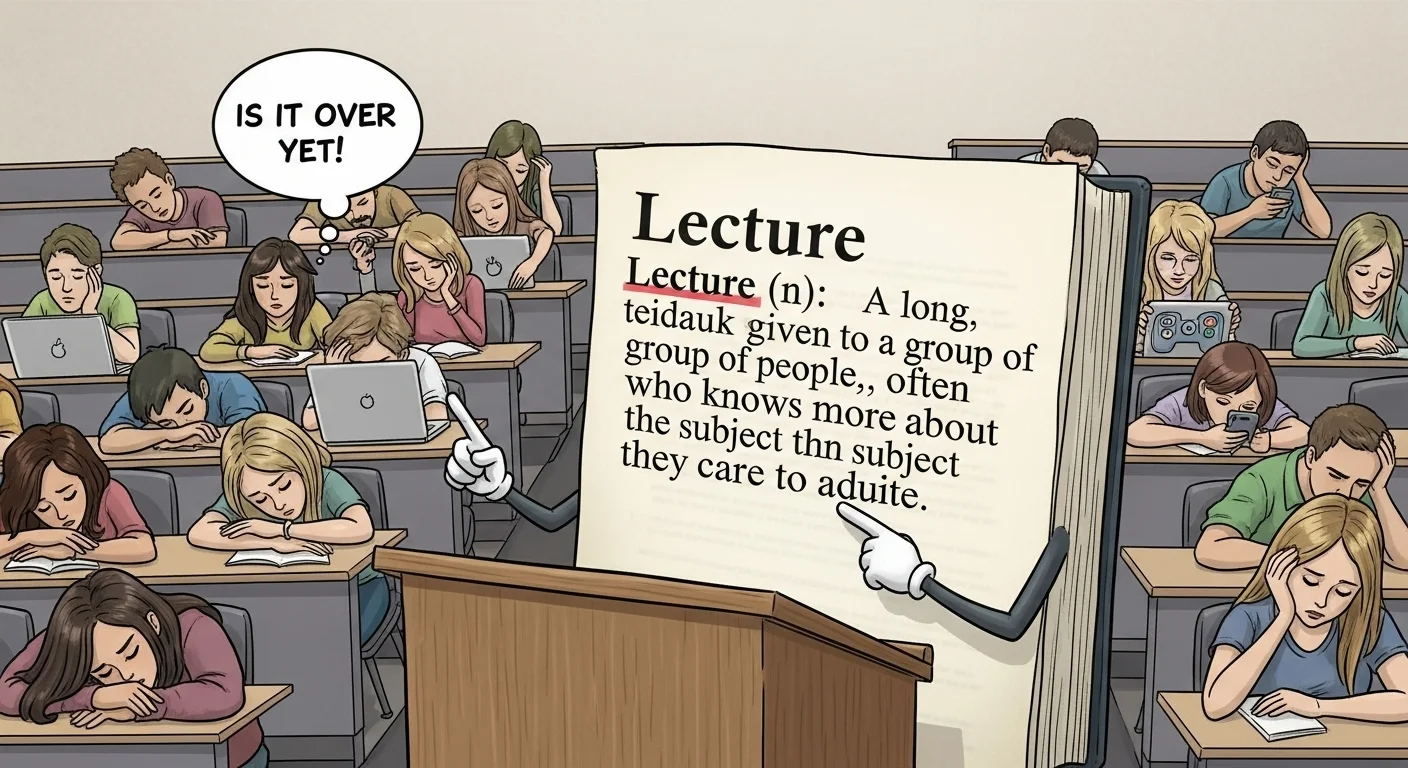
What Does “Lecture” Mean?
A lecture is a spoken presentation where someone explains a topic to others, usually to teach or inform.
Simple definition
-
Lecture = a talk given to teach or explain something
Traditionally, lectures are:
-
Formal
-
One person speaking
-
Audience mainly listening
The word can describe both educational talks and serious advice or criticism, depending on tone.
Origin and Background of the Word Lecture
The word lecture comes from the Latin word lectura, meaning “a reading.”
In the past:
-
Teachers read texts aloud
-
Students listened and took notes
Over time, the meaning expanded from reading to explaining ideas verbally, especially in academic settings.
Lecture Meaning in Education
This is the most common and neutral use of the word.
In education, a lecture is a structured lesson where a teacher or professor explains a subject to students.
Common examples
-
University lecture
-
Online lecture
-
Recorded lecture
-
Guest lecture
Educational definition
A lecture is a formal teaching method where information is delivered verbally to a group.
Lectures are widely used in:
-
Schools
-
Colleges
-
Universities
-
Online courses
Lecture Meaning in Everyday Conversation
Outside education, lecture can take on a more emotional meaning.
When someone says:
-
“He lectured me”
-
“I don’t need a lecture”
They usually mean:
-
Someone talked for too long
-
The tone felt judgmental or preachy
-
Advice was unwanted
Informal meaning
In casual speech, to lecture someone means to talk at them in a serious or critical way, often without listening back.
Lecture Meaning in Work and Professional Settings
In professional environments, lecture can be neutral or negative depending on delivery.
Neutral usage
-
A manager giving a lecture on company policy
-
A trainer delivering a lecture on safety rules
Negative usage
-
“My boss lectured me about being late”
In the negative sense, it suggests talking down to someone rather than having a discussion.

How People Use “Lecture” in Real Conversations
People use the word lecture in different tones depending on context.
Neutral or positive use
-
Academic discussions
-
Professional training
-
Educational videos
Negative or emotional use
-
Arguments
-
Parental advice
-
Workplace conflicts
The meaning depends more on tone and intent than the word itself.
Real-Life Examples of “Lecture” Explained
Example 1:
“I have a biology lecture at 9 a.m.”
Explanation: A formal class where a teacher explains biology.
Example 2:
“He gave a long lecture about responsibility.”
Explanation: Someone spoke seriously, possibly in a critical tone.
Example 3:
“She attended an online lecture on marketing.”
Explanation: A digital educational session.
Example 4:
“Please don’t lecture me — I already know.”
Explanation: The speaker feels annoyed by unwanted advice.
Lecture vs Similar Words
Understanding related words helps clarify meaning.
Lecture vs Speech
-
Lecture: Educational or instructional
-
Speech: Can be persuasive, emotional, or ceremonial
Lecture vs Presentation
-
Lecture: One-way teaching
-
Presentation: Often visual and interactive
Lecture vs Sermon
-
Lecture: Educational
-
Sermon: Religious or moral
Related Words and Expressions
These terms are closely connected to lecture meaning and are useful for internal linking:
-
Talk – informal spoken explanation
-
Speech – formal address
-
Presentation – structured explanation with visuals
-
Seminar – interactive teaching session
-
Workshop – hands-on learning event
-
Monologue – one person speaking for a long time
Why Understanding “Lecture” Matters in 2026
In 2026, learning happens everywhere:
-
Online courses
-
Video platforms
-
Corporate training
-
Social media education
Knowing the lecture meaning helps you understand whether someone is teaching, advising, or criticizing. It also helps you choose better words when communicating with others.

How to Use “Lecture” Correctly in Writing
Usage tips
-
Use it neutrally in education contexts
-
Be careful using it in emotional situations
-
Consider tone when describing conversations
Sentence structure
Subject + lecture + topic
Example:
-
The professor delivered a lecture on history.