

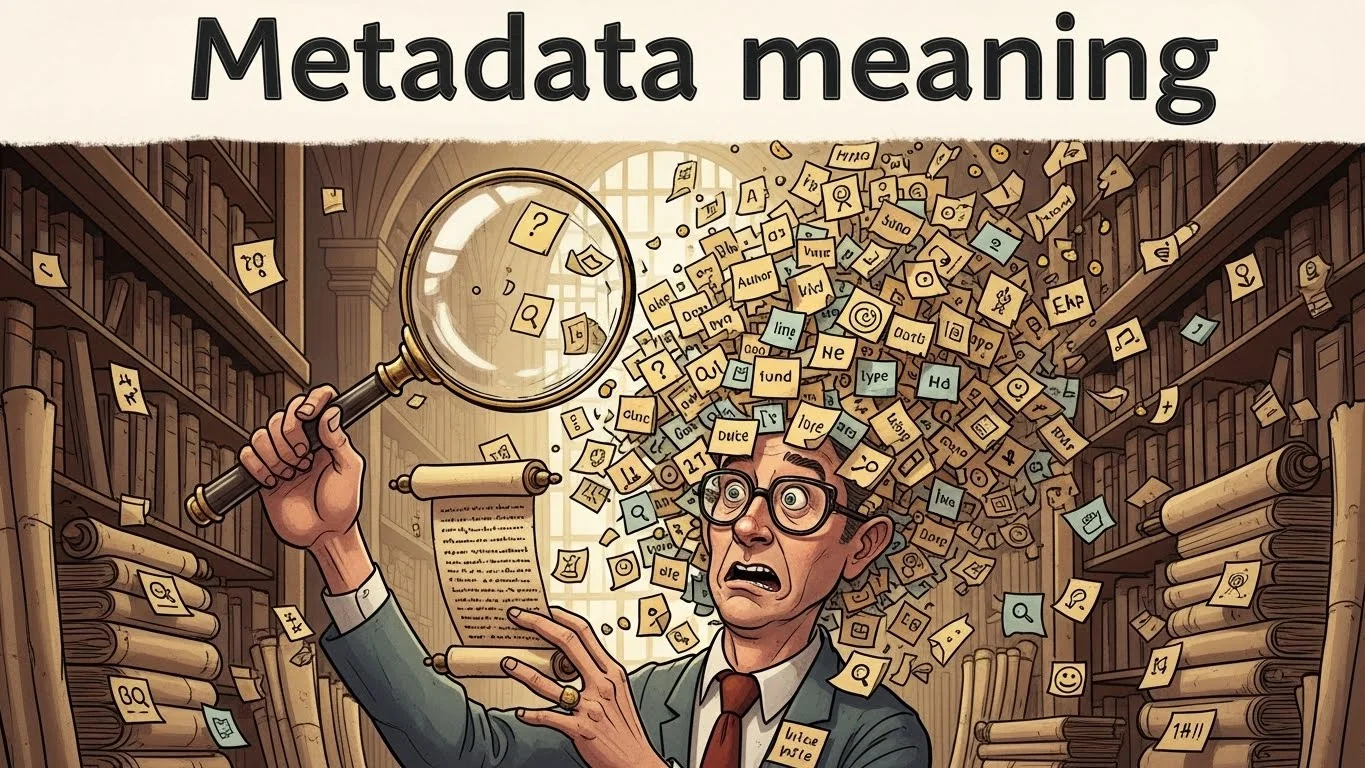
What Does “Metadata” Mean?
Metadata meaning is information that describes, summarizes, or gives context to other data.
Simple definition:
Metadata = data about data.
Example:
A photo on your phone has metadata meaning including the date it was taken, location, camera type, and file size.
Metadata Meaning in Simple Words
It’s like a label or tag for your files
Helps computers and people find and organize data
Can include details such as author, creation date, file type, and more
Origin of the Word “Metadata”
Comes from the Greek prefix “meta-”, meaning “beyond” or “about”
Combined with “data,” it literally means “data about data”
The concept became widespread in computer science in the late 20th century
Types of Metadata
Metadata can be divided into several types:
Descriptive Metadata:
Describes the content, e.g., title, author, keywords
Structural Metadata:
Shows how parts of a file relate, e.g., chapters in an ebook or layers in a design file
Administrative Metadata:
Provides information about management, e.g., creation date, file format, access rights
Metadata Meaning in Digital Files
Photos: Date, location, camera settings
Documents: Author, file type, version
Videos: Duration, resolution, subtitles
Emails: Sender, recipient, time, subject line
Metadata helps you sort, filter, and manage files efficiently.

Metadata in Websites
Search engines use metadata to understand page content
Key types of website metadata:
Title tags: Appear in search results
Meta descriptions: Summary of page content
Meta keywords: Used less today but historically for SEO
Proper metadata improves visibility and ranking in 2026
Metadata in Databases
Metadata tells the database what data is stored and how
Examples include: table names, column types, relationships
Essential for data analysis, retrieval, and integrity
Metadata in Social Media
Photos and videos have metadata: date, location, device
Helps platforms suggest content, tag friends, or organize albums
Also used for targeted advertising and analytics
Benefits of Metadata
Organization: Easily sort and manage files
Searchability: Quickly find data
Security: Track access and version history
Analysis: Useful in big data and reporting
SEO: Improves website visibility
Common Misunderstandings About Metadata
Metadata is not visible in the content itself but can be viewed with special tools
It’s not always private; some metadata (like photo location) can be shared unintentionally
Not all metadata is required—its presence depends on file type and usage
Metadata in Everyday Life
Taking a photo with a smartphone automatically adds metadata
Sending a PDF document may include author, creation date, and software info
Music files have metadata like artist, album, and genre
Related Terms and Concepts
Data: Raw facts and information
Tags: Keywords attached to content
EXIF: Metadata for photos
Schema Markup: Metadata for websites
File Properties: Basic metadata in computers