
What Does “Pathology” Mean?
The most accurate pathology is:
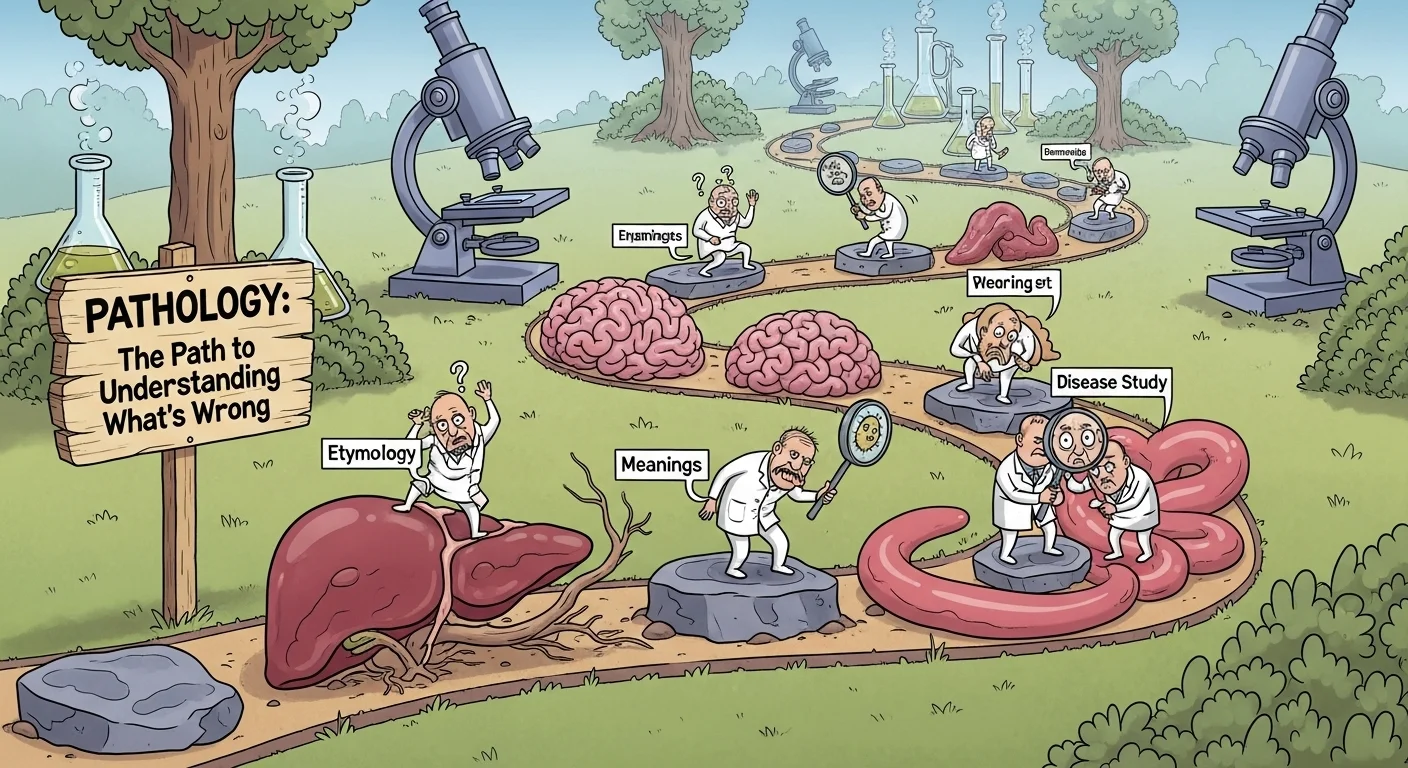
Pathology is the study of diseases, including their causes, development, and effects on the body.
In simpler terms:
Pathology = study of disease
It looks at how diseases start, progress, and affect organs or tissues
This is the main meaning in medicine and science.
Pathology Meaning in Simple English
You can think of pathology like this:
Pathology = understanding what goes wrong in the body when someone is sick
Doctors use pathology to:
diagnose diseases
understand causes of illness
guide treatment
Even without being a medical professional, understanding this basic pathology helps you make sense of medical information.
Pathology Meaning in Medicine
In medicine, pathology is a major branch that helps doctors:
identify diseases from samples like blood, tissue, or organs
examine changes caused by infections, cancer, or injury
make accurate diagnoses
For example:
“The pathology report shows cancer cells in the tissue.”
“Pathology confirmed the infection type.”
Here, pathology is directly linked to laboratory testing and disease study.
Types of Pathology
Pathology is divided into several important types:
Clinical Pathology – studies blood, urine, and lab tests to find diseases.
Anatomical Pathology – studies organs and tissues to detect disease changes.
Forensic Pathology – investigates causes of death for legal purposes.
Molecular Pathology – studies diseases at a cellular or genetic level.
Knowing these types gives context to pathology meaning in different medical fields.
Pathology Meaning in Everyday Life
Even outside hospitals, the word pathology is used in discussions like:
“The lab is doing pathology tests.”
“She studied pathology in university.”
Here, pathology meaning refers to learning about disease and its effects, whether in a school, lab, or hospital.

How Pathology Helps Doctors
Pathology is crucial for modern medicine because it:
confirms diagnoses with lab tests
guides treatment plans
monitors disease progress
helps in research for new therapies
Without pathology, many illnesses would be harder to detect or treat.
Real-Life Examples of Pathology
Example 1
“The pathology report confirmed the presence of cancer in the tissue.”
Explanation: Pathology identifies disease in organ samples.
Example 2
“Pathology labs test blood samples to find infections.”
Explanation: Clinical pathology checks bodily fluids for disease.
Example 3
“Forensic pathology helped determine the cause of death.”
Explanation: Pathology is applied in legal investigations.
These examples show the practical uses of pathology meaning in medicine and science.
Pathology Meaning in Science and Research
Beyond hospitals, pathology is used in research to:
study disease mechanisms
discover new treatments
test drugs and vaccines
So pathology meaning extends to scientific investigation as well as clinical care.
Pathology vs. Symptoms
It’s important to understand the difference:
Symptoms are what a patient feels (pain, fever, fatigue).
Pathology studies the cause and nature of the disease behind those symptoms.
This distinction clarifies pathology meaning in both clinical and educational contexts.
Pathology Meaning in Education
Students in medical and biology courses study pathology to:
understand human and animal diseases
prepare for careers in medicine, lab work, or research
read and interpret lab reports
So pathology meaning is not limited to doctors—it is also a learning subject.
Common Misunderstandings About Pathology
Pathology is not the same as diagnosis, although it helps make a diagnosis.
Pathology is not a disease itself; it is the study of disease.
Pathology reports do not always explain treatment; they explain what disease is present.
Understanding these points ensures the correct interpretation of pathology meaning.
Pathology Meaning in Digital Health and Modern Labs
In 2026, pathology has expanded to include:
digital pathology (scanning and analyzing tissue slides online)
AI-assisted pathology for faster diagnosis
telepathology for remote consultations
Modern developments make pathology meaning more advanced and technology-driven.
Related Terms
When studying pathology meaning, you may also see:
histology – study of tissues
cytology – study of cells
biopsy – sample taken for pathology
lab test – test analyzed by pathologists
disease mechanism – how disease develops
These terms help understand how pathology works in medicine and research.