
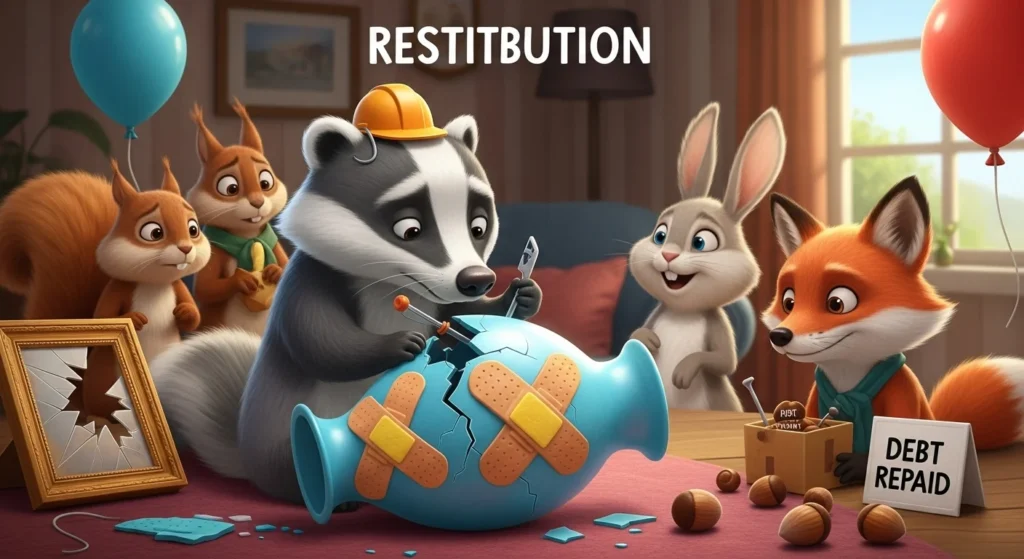

What Does “Restitution” Mean?
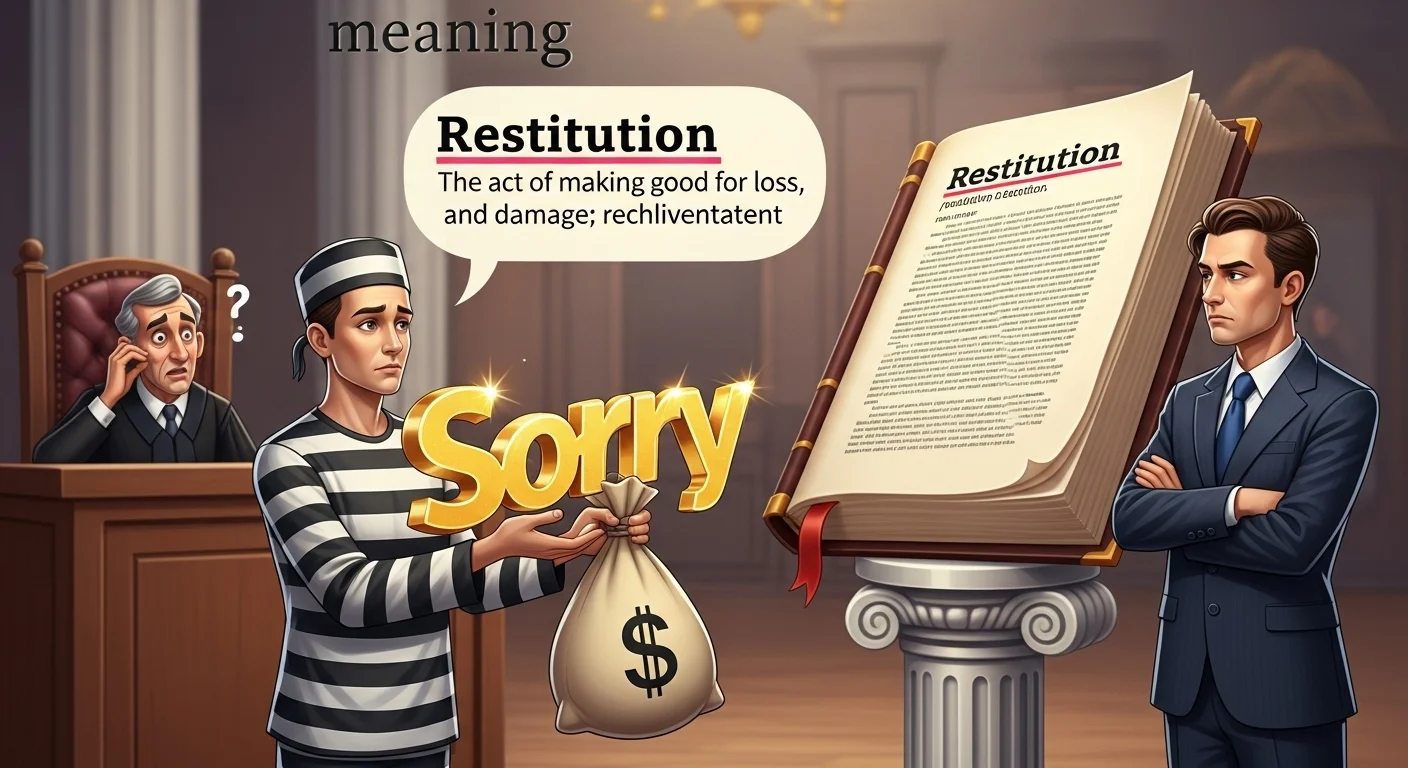
The restitution meaning refers to the act of restoring or compensating someone for a loss or wrongdoing.
Simple definition
Restitution = giving back what was lost or paying for harm caused
It is often used in legal, financial, and social contexts to ensure justice and fairness.
Origin and Background of Restitution
The word restitution comes from Latin restitutio, meaning “restoration” or “to restore.”
Historical context
Ancient law systems used restitution to resolve disputes
It has always been about restoring balance after harm
Modern law codifies restitution to compensate victims and correct wrongdoing
This historical background makes restitution meaning central to fairness and justice.
Restitution Meaning in Law
In legal terms, restitution is a court-ordered payment or action to compensate someone for losses caused by another person.
Common examples
Repaying stolen money
Returning property taken unlawfully
Compensating for damage to someone’s belongings
Courts often use restitution to ensure the victim is made whole, even if the offender is punished separately.
Restitution Meaning in Everyday Life
Restitution doesn’t only happen in court; it also applies in daily life.
Everyday examples
Returning a borrowed item in good condition
Replacing a broken neighbor’s fence
Compensating a friend for a mistake
In all these cases, restitution meaning focuses on making things right after a loss or wrongdoing.
Types of Restitution
Restitution can appear in different forms:
Monetary Restitution: Paying money to cover a loss or damage.
Property Restitution: Returning stolen or lost property.
Equitable Restitution: Taking actions to restore fairness, such as undoing a harmful transaction.
These types are often combined in legal and personal situations.
How People Use “Restitution” in Real Conversations
The term shows up in law, personal discussions, and news.
Examples:
“The court ordered restitution to the victims of the fraud.”
“He offered restitution after damaging my car.”
“Restitution is necessary to make things fair again.”
These examples highlight restitution meaning as fairness, accountability, and restoration.
Real-Life Examples of Restitution Explained
Example 1:
“A thief must pay restitution to the store he robbed.”
Explanation: Compensating for stolen goods.
Example 2:
“The company provided restitution for the defective product.”
Explanation: Compensating customers financially or replacing goods.
Example 3:
“She offered restitution after accidentally breaking a friend’s vase.”
Explanation: Restoring fairness personally.
Restitution vs Similar Terms
Understanding similar words helps clarify meaning:
Restitution vs Compensation
Restitution: Restoring what was lost or making things right
Compensation: Payment or benefit for any loss, sometimes not tied to wrongdoing
Restitution vs Reparation
Restitution: Returning or restoring
Reparation: Repairing damage, often used in historical or international context
Restitution vs Refund
Restitution: Legal or moral obligation to restore
Refund: Returning money for a purchase
Related Words and Expressions
Related terms that often appear with restitution include:
Damages – compensation awarded in law
Indemnity – protection against loss
Restoration – bringing back to original state
Accountability – responsibility for actions
Justice – fairness in outcomes
Why Understanding Restitution Matters in 2026
In 2026, restitution is not just a legal term but also a principle for everyday fairness. Understanding restitution meaning helps you:
Navigate legal matters and insurance claims
Resolve disputes effectively
Maintain integrity in personal and professional life
Understand news and reports about court cases
Restitution ensures fairness in society, making it a timeless and practical concept.
How to Use “Restitution” Correctly
Tips for correct usage
Use in legal, financial, or moral contexts
Mention what is being restored or compensated
Use when emphasizing fairness or accountability
Example:
“The company paid restitution to customers after the product recall.”