

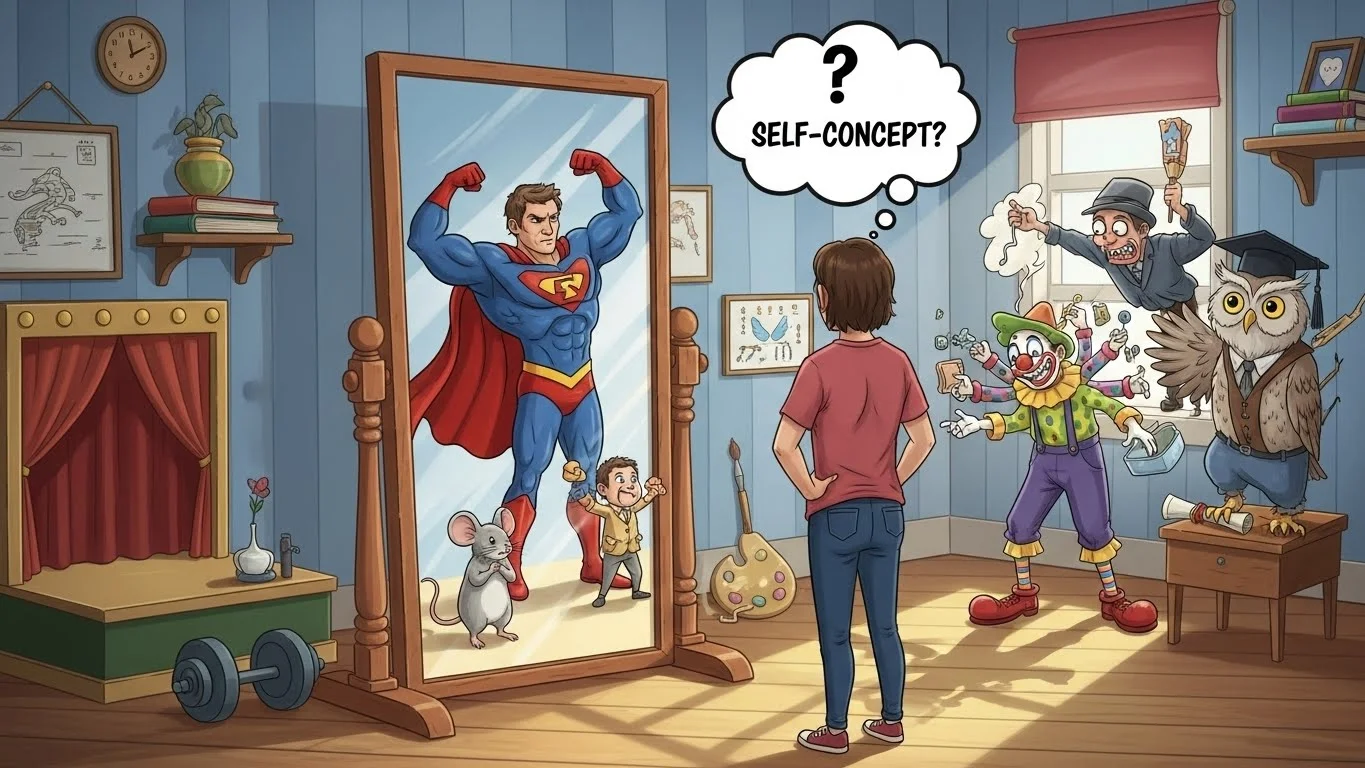
What Does “Self Concept” Meaning?
Self Concept Meaning refers to a person’s beliefs, perceptions, and evaluations of themselves.
Simple definition:
Self-concept = the mental image or understanding you have of yourself.
Example:
“Her Self Concept Meaning as a confident student motivated her to take on leadership roles.”
Components of Self Concept
Self-Image:
How you see yourself physically, emotionally, and socially
Example: “I see myself as friendly and creative.”
Self-Esteem:
How you feel about yourself and your worth
Example: “High self-esteem helps you handle criticism confidently.”
Ideal Self:
The person you want to become
Example: “Her ideal self is a successful entrepreneur.”
Social Self:
How others perceive you and your roles in society
Example: “At work, his social self is seen as reliable and helpful.”
Development of Self Concept
Begins in childhood and continues through life
Influenced by:
Family interactions
Friends and peer feedback
Education and achievements
Media and cultural expectations
Self-concept evolves as experiences and understanding of oneself grow
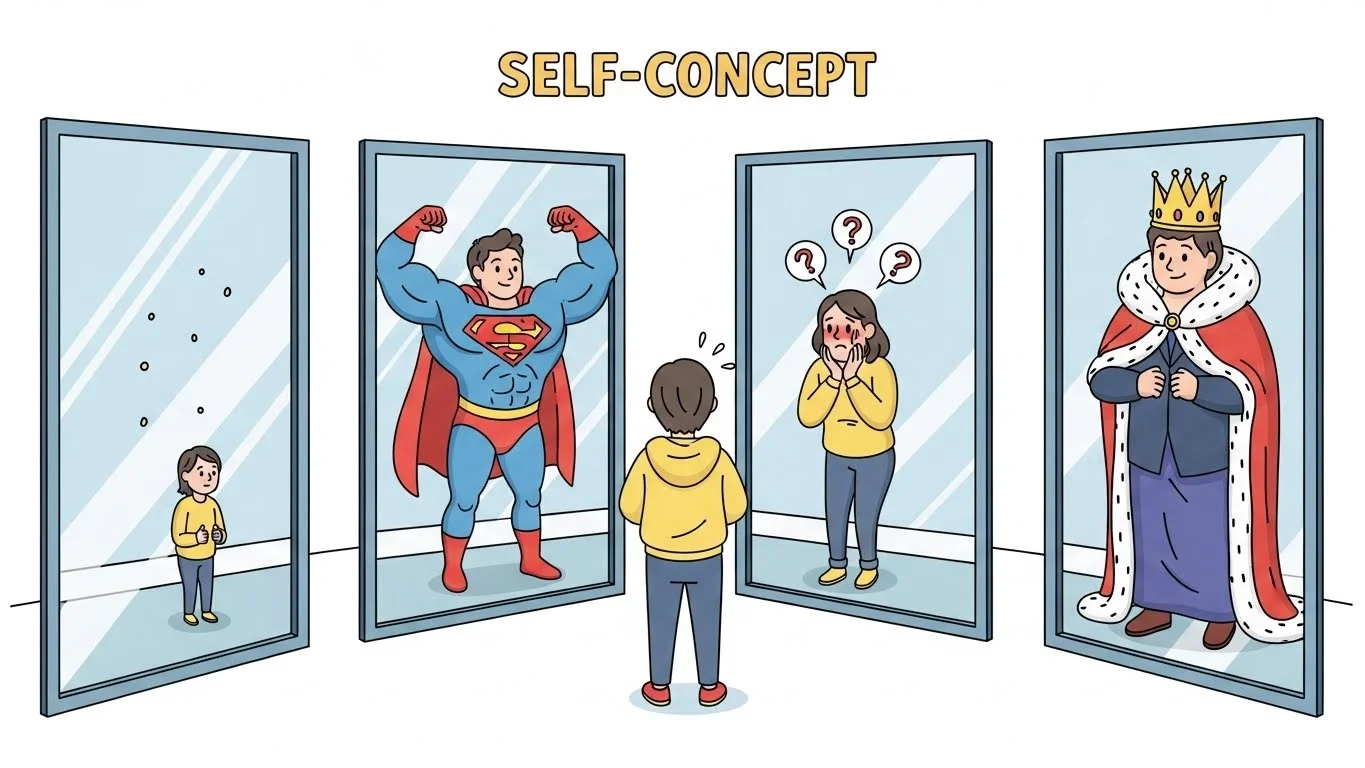
Importance of Self Concept
Guides behavior and decisions: Influences choices and goal-setting
Affects relationships: Helps in understanding and connecting with others
Impacts mental health: Positive self-concept boosts confidence, while negative self-concept may lead to stress or low self-esteem
Promotes personal growth: Encourages self-reflection and continuous improvement
Example:
“A strong self-concept enabled her to pursue challenges without fear of failure.”
Self Concept in Psychology
Studied in humanistic psychology by Carl Rogers and Abraham Maslow
Related to self-identity, self-awareness, and self-esteem
Key in therapy and counseling to improve mental wellbeing
Self Concept in Education
Students with positive self-concept:
Perform better academically
Are more motivated and resilient
Participate actively in school activities
Teachers can support self-concept through positive feedback, encouragement, and recognition
Common Misunderstandings About Self Concept
Not the same as self-esteem alone—it includes beliefs, feelings, and perceptions
Not fixed; it changes with experiences and self-reflection
Self-concept is internal, but influenced by external feedback

Related Terms and Concepts
Self-Awareness: Knowing your thoughts, emotions, and behaviors
Self-Esteem: Feeling confident and worthy
Identity: How you define yourself in society
Self-Image: Mental picture of yourself
Personal Growth: Continuous development of skills, attitudes, and character