

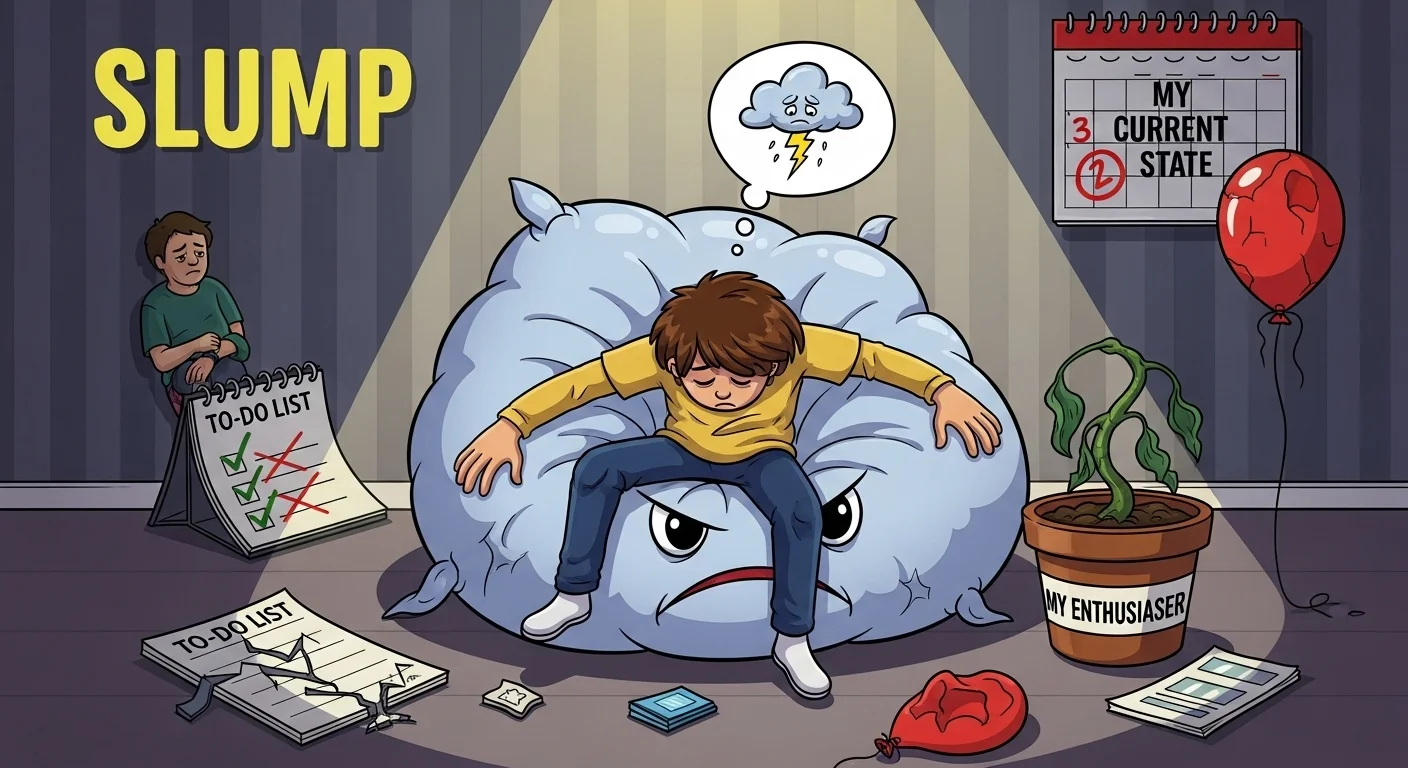
What Does “Slump” Mean?
The basic slump meaning is:
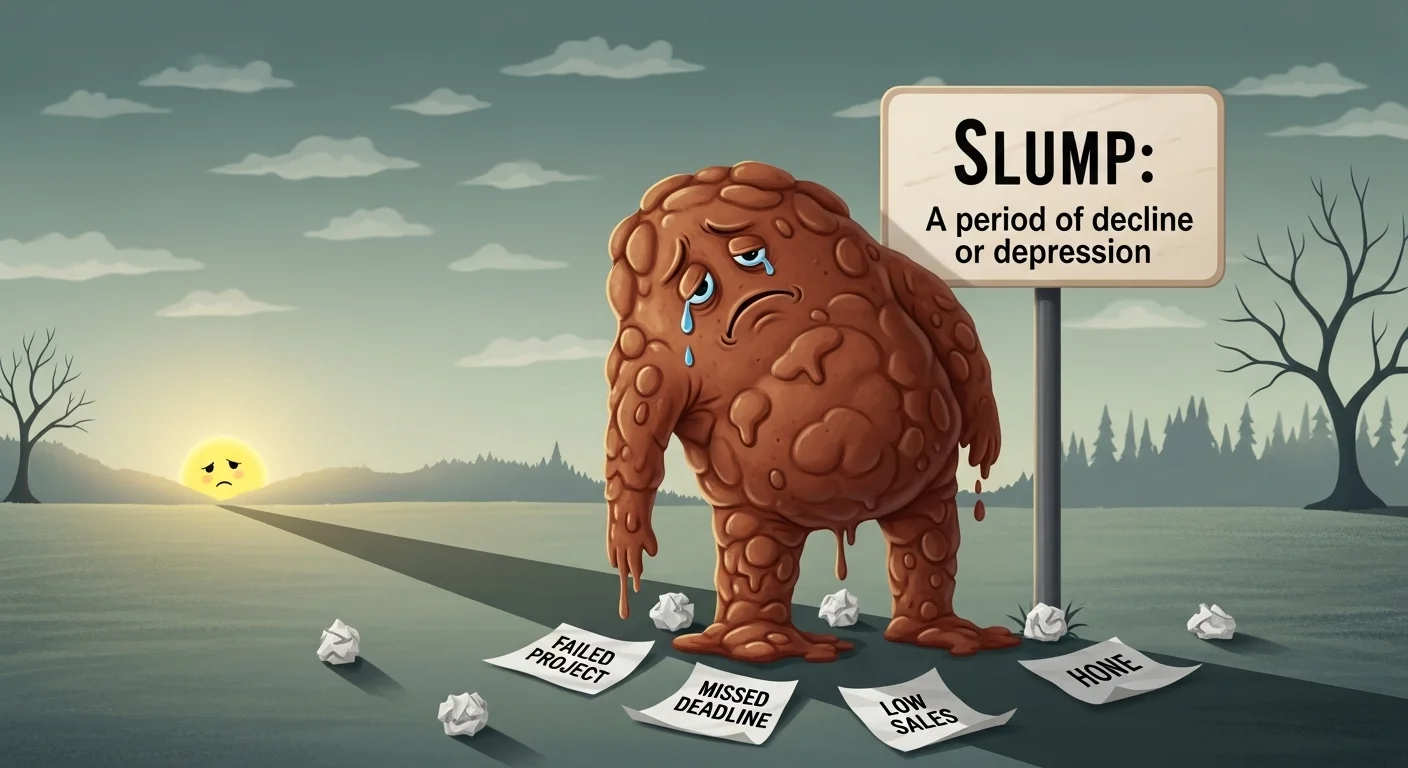
A slump is a sudden or noticeable drop in performance, activity, success, or energy.
In simple words, a slump means things are not going well for a short or medium period.
It can describe:
a person
a team
a business
an economy
your mood or motivation
So when someone says, “I’m in a slump,” they usually mean they are not performing or feeling as well as before.
Simple Definition of Slump in Easy English
You can remember the meaning like this:
Slump = a bad phase after a good or normal phase
For example:
lower sales than usual
weaker results than before
feeling mentally low
poor performance for some time
This is the most accurate and common explanation of slump meaning.
Slump Meaning in Everyday Life
In daily life, slump usually refers to a temporary problem, not a permanent failure.
People use it to talk about:
low motivation
low energy
bad routine
emotional tiredness
For example:
“I’m in a reading slump.”
“I’m having a work slump this month.”
Here, slump meaning is connected to personal performance and daily habits.
Slump Meaning in Work and Career
In professional life, slump often describes:
a period when your productivity or results become lower than normal.
Examples include:
missing deadlines
feeling mentally blocked
losing focus
poor performance reviews
In modern workplaces, people talk openly about burnout and mental health, so the phrase “career slump” is very common in 2026.
Slump Meaning in Sports
One of the most popular uses of slump is in sports.
In sports, slump meaning refers to:
a player or team performing badly for a period of time after normal or good performance.
Examples:
a striker not scoring goals
a batsman failing repeatedly
a basketball player missing easy shots
This is usually called a:
form slump
scoring slump
performance slump
Slump Meaning in Business and Economy
In business and economics, slump has a slightly more serious meaning.
Here, slump refers to:
a decline in economic activity, sales, or market performance.
For example:
a housing slump
a tourism slump
a retail slump
In news headlines, slump meaning often connects to:
reduced demand
lower profits
falling consumer confidence
Slump Meaning in Mental and Emotional Context
In modern conversation, slump is also used to describe emotional and mental states.
People may say:
“I’m in a motivation slump.”
“I feel stuck in a creative slump.”
Here, slump meaning is very close to:
mental fatigue
emotional low phase
creative block
It does not necessarily mean depression. It usually describes a short or medium difficult period.
Slump Meaning in Chat and Social Media
On social platforms, people often use slump in a casual way.
Common phrases include:
study slump
gym slump
content slump
productivity slump
In chat language, slump meaning is:
a relatable way to describe being off-track or not doing your best lately.
It sounds natural and friendly rather than dramatic.
Real-Life Examples of “Slump” in Sentences
Example 1
“I’m in a work slump and can’t focus this week.”
Explanation: The person’s productivity and concentration are lower than usual.
Example 2
“The team is going through a scoring slump.”
Explanation: The team is not performing well in matches.
Example 3
“Sales are in a slump this quarter.”
Explanation: Business results have dropped.
Example 4
“I’ve been in a creative slump since last month.”
Explanation: The person feels mentally blocked.
These examples show how flexible the slump meaning is in real situations.
Slump as a Verb vs Slump as a Noun
The word slump can be used in two main grammatical forms.
Slump as a noun
“The company is in a slump.”
“I’m going through a slump.”
Here, slump refers to the bad period itself.
Slump as a verb
“Profits slumped this year.”
“Attendance slumped after the holidays.”
Here, slump means to fall or decrease suddenly.
Both uses carry the same core idea of decline.

Physical Meaning of Slump
Slump also has a physical meaning.
In posture or body language, slump means:
to sit, stand, or fall in a heavy or tired way.
Example:
“He slumped into the chair after work.”
This meaning focuses on physical tiredness rather than performance.
Slump Meaning in Academic and Study Context
Students often use slump to describe difficult study phases.
Common expressions include:
study slump
exam slump
focus slump
In this context, slump meaning refers to:
low motivation
poor concentration
lack of discipline
This is especially common during long semesters or exam pressure.
Slump Meaning in Creative Fields
Writers, designers, and artists often talk about:
creative slump
inspiration slump
Here, slump means:
a temporary loss of ideas, flow, or confidence.
It does not mean lack of talent. It usually refers to a mental block.
Why Slump Is Usually Temporary
One important part of the real slump meaning is that it usually implies a short-term problem.
Unlike words such as failure or collapse, slump suggests:
recovery is possible
improvement is expected
the situation can change
That is why people feel comfortable saying they are “in a slump” instead of saying they have failed.
Slump vs Similar Words
Understanding similar words helps clarify slump meaning.
Slump vs Decline
Slump usually suggests a noticeable and often sudden drop.
Decline can be slow and long-term.
Slump vs Failure
Slump means a bad phase.
Failure means not achieving a specific goal.
Slump vs Depression
Slump refers to performance or mood for a period.
Depression is a medical and psychological condition.
These differences are important, especially in modern conversations.
Common Expressions Using Slump
You will often hear these phrases:
in a slump
going through a slump
performance slump
economic slump
creative slump
productivity slump
All of these follow the same core slump meaning.
Slump Meaning in News and Headlines
Journalists frequently use slump because it sounds natural and neutral.
Examples include:
“Exports slump in the third quarter.”
“Tourism industry faces a major slump.”
In media language, slump meaning clearly signals a negative trend without using dramatic or emotional words.
How to Use “Slump” Correctly in Your Own Sentences
Here are simple tips.
Use slump when:
the problem is temporary
performance or results are lower than usual
you want to sound natural and modern
Examples:
“My motivation has slumped recently.”
“The company is in a sales slump.”
Avoid using slump when:
you are talking about a permanent situation
you are describing a serious medical condition
Related Words and Expressions
If you are learning vocabulary around slump meaning, you may also see:
burnout
low phase
rough patch
setback
downturn
These are useful alternatives in similar contexts.
Why Understanding Slump Meaning Matters in 2026
In 2026, people openly discuss:
mental health
productivity struggles
work-life balance
creative pressure