
What Does “Stilted” Mean?
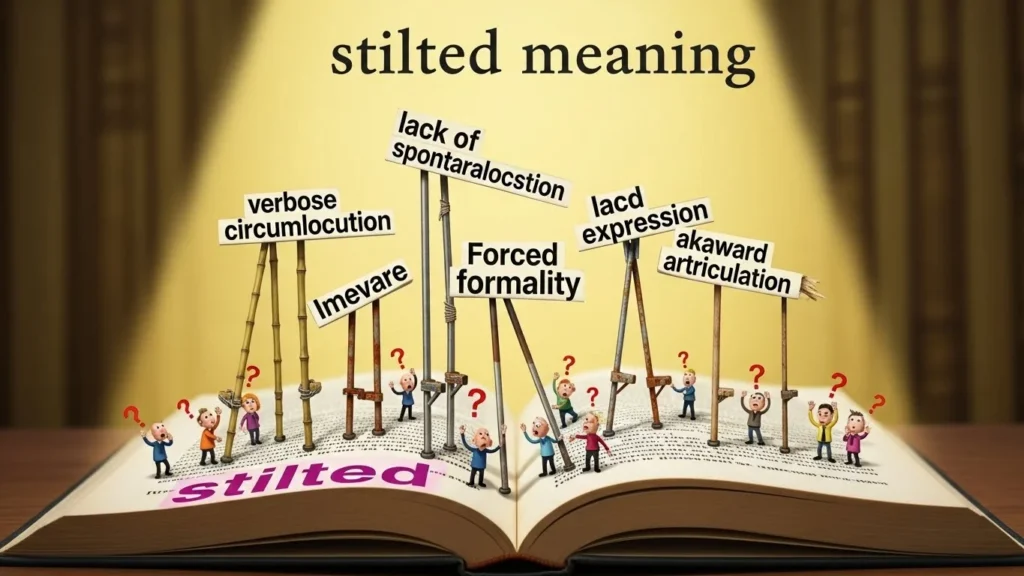
Stilted meaning is an adjective that describes:
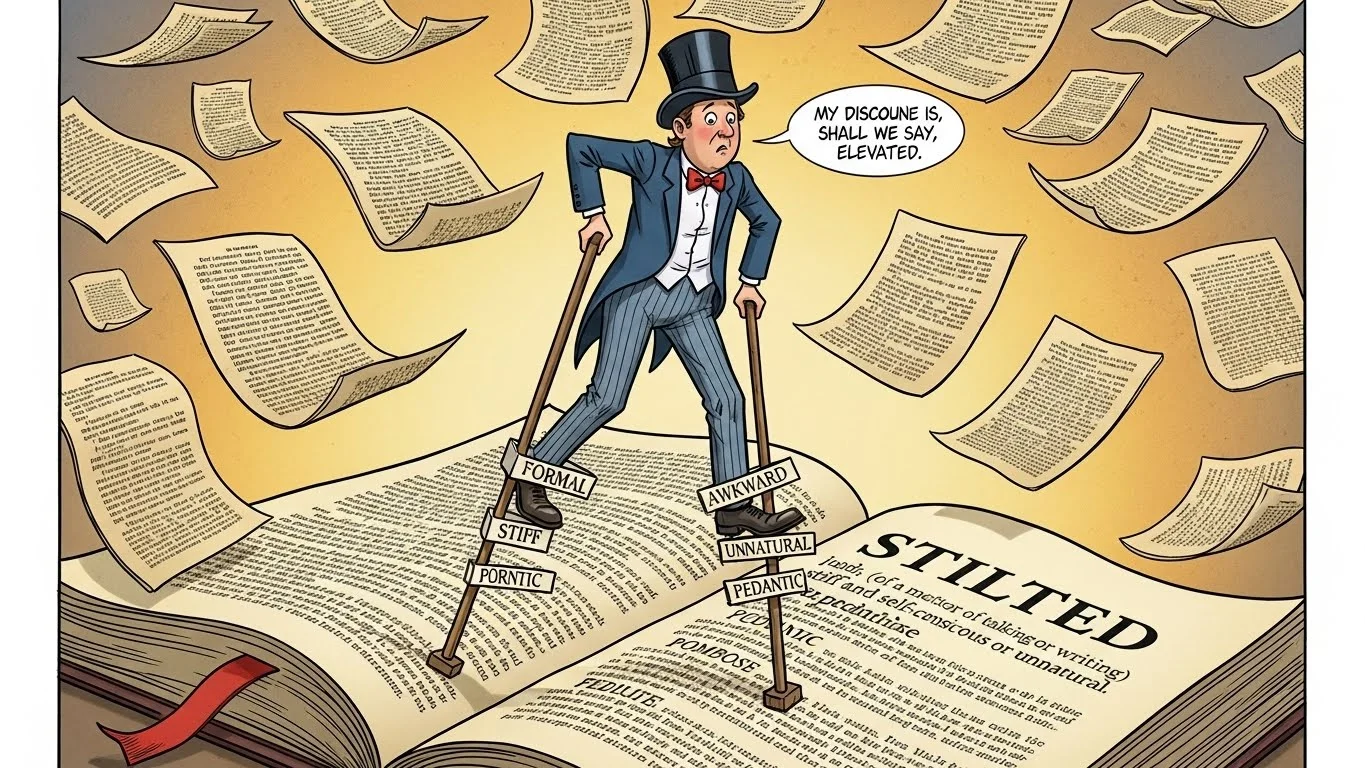
Speech or writing that is unnatural, awkward, or overly formal.
Behavior that seems rigid, stiff, or forced.
Simple definition:
Stilted = not smooth, overly formal, or awkward.
Example:
“His stilted speech made the presentation hard to follow.”
Origin of the Word “Stilted”
Derived from stilt, a tall support used to walk above ground.
The metaphor: speech or behavior that is “raised” or “artificially elevated” above natural flow.
First used in English in the 17th century to describe formal, unnatural writing.
Stilted Meaning in Simple Words
Sounds forced or unnatural instead of casual or flowing.
Can describe writing, speaking, or mannerisms.
Often used in critiques of communication, literature, or performances.
Example:
“The actor’s stilted delivery made the scene feel fake.”
Stilted in Different Contexts
Writing: Overly formal words in emails or essays.
“The essay was stilted, using complicated words unnecessarily.”
Speech: Talking in a way that feels rigid or rehearsed.
“His stilted speech failed to engage the audience.”
Behavior: Movements or gestures that seem unnatural.
“She walked with a stilted posture, making her appear tense.”
Art and Performance: Dialogue or acting that lacks fluidity.
“The play’s dialogue was stilted, sounding scripted rather than natural.”
Real-Life Examples of Stilted
“The politician’s stilted meaning answers made voters suspicious.”
“Her stilted tone in the email sounded cold and impersonal.”
“The teacher’s stilted instructions confused the students.”
“He tried to compliment her, but it came out stilted and awkward.”
“The novel’s stilted language made it hard to enjoy.”
Common Misunderstandings About Stilted
Not just formal: Stilted implies awkwardness, not just politeness.
Not always intentional: Someone may sound stilted without trying.
Different from clear: Clear communication can be formal but not stilted.
How to Avoid Stilted Speech or Writing
Use natural phrasing instead of overly complex words.
Read aloud to check if it sounds conversational.
Avoid forcing humor or expressions that feel unnatural.
Practice relaxed and confident body language in speech.
Revise writing to make it smooth and easy to read.
Related Words
Awkward: Lacking ease or grace
Rigid: Stiff or inflexible
Formal: Polite but can be stilted if overdone
Forced: Made to happen unnaturally
Unnatural: Lacking natural flow