
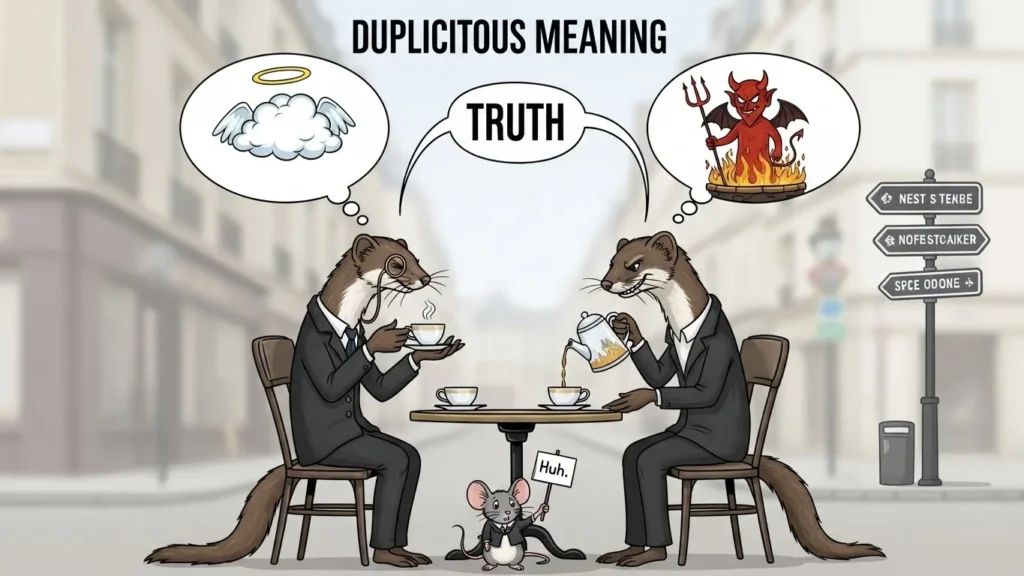

Duplicitous Meaning in Urdu
In Urdu, “duplicitous” can be translated as:
- “مکار”
- “دوغلا”
- “فریب دینے والا”
It describes someone who behaves dishonestly or hides their true intentions.
Duplicitous Synonym
Some common synonyms of “duplicitous” include:
- Deceitful
- Dishonest
- Two-faced
- Fraudulent
- Sneaky
- Hypocritical
These words all relate to dishonest or misleading behavior.
Duplicitous in a Sentence
Here are example sentences using “duplicitous”:
- “He was accused of being duplicitous in business dealings.”
- “Her duplicitous behavior destroyed trust in the relationship.”
- “The politician’s duplicitous actions angered voters.”
Duplicitous Person Meaning
A duplicitous person is someone who:
- Says one thing but does another
- Hides true motives
- Pretends to be honest while being deceptive
Such a person is often considered untrustworthy.
Duplicitous Pronunciation
“Duplicitous” is pronounced as:
“doo-PLISS-ih-tus” (/duːˈplɪsɪtəs/)
The stress is on the second syllable: PLISS.
Duplicitous Meaning and Examples
Meaning: deceptive or dishonest in behavior
Examples:
- A friend pretending to support you while speaking badly behind your back
- A company hiding important information from customers
- Someone lying to different people for personal gain
Duplicitous Behavior
Duplicitous behavior refers to actions that involve deception, dishonesty, or hidden intentions. It often damages trust in relationships, workplaces, and society.
Duplicitous Examples
Common examples of duplicitous behavior include:
- Making false promises
- Secretly betraying someone’s trust
- Pretending loyalty while acting against someone
- Giving misleading information intentionally
What Does “Duplicitous” Mean?
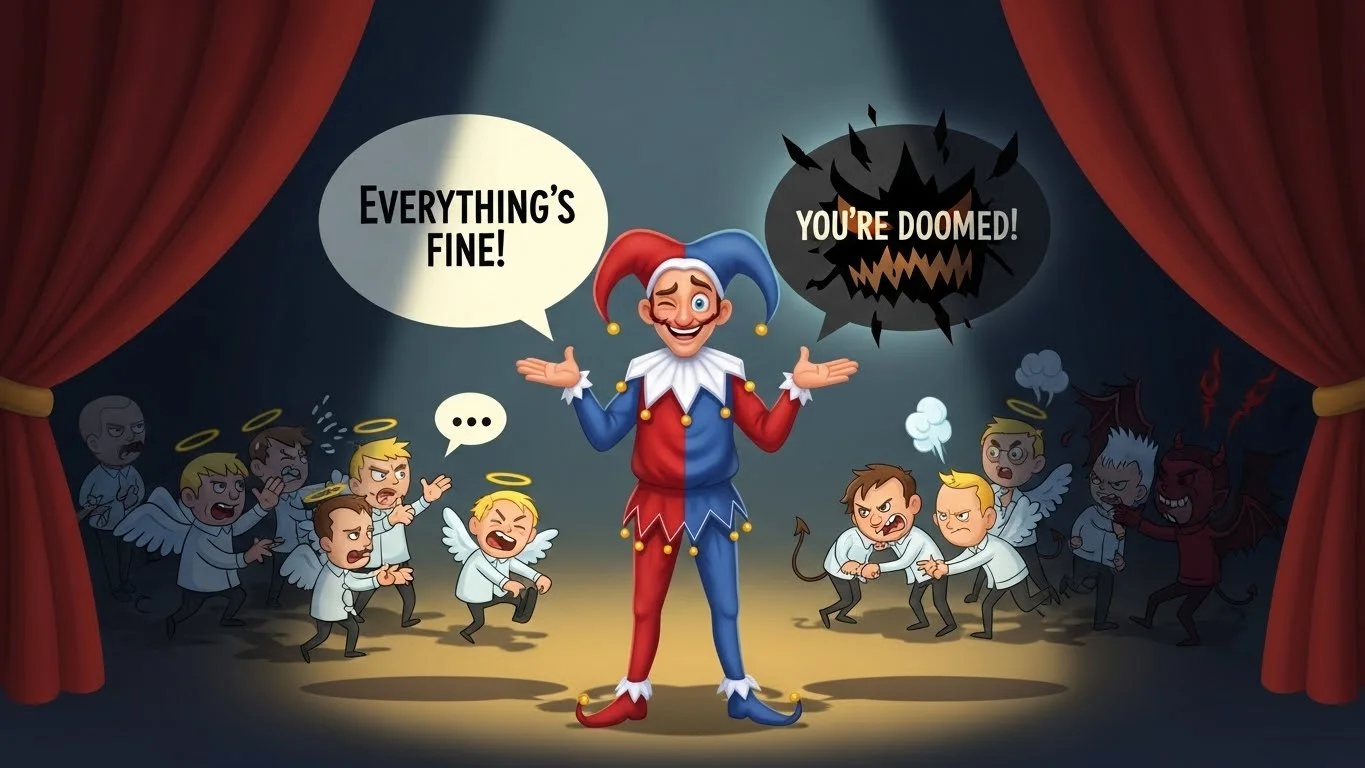
Duplicitous means deliberately dishonest or deceptive, especially by saying one thing while intending or doing another.
A duplicitous person:
Pretends to be honest
Hides true intentions
Acts differently behind the scenes
The key idea is intentional deception, not accidental confusion.
Duplicitous Meaning in Simple Terms
In simple language, duplicitous means:
Two-faced
Fake in a calculated way
Not truthful on purpose
If someone is duplicitous, they are knowingly misleading others, often to protect themselves or gain something.
Where the Word “Duplicitous” Comes From
The word duplicitous comes from the Latin word duplicitas, meaning “double” or “twofold.”
This origin matters because:
It highlights having two sides
One side is shown publicly
The other side is hidden
That “double nature” is central to the duplicitous meaning.
How Duplicitous Is Used in Real Conversations
You’ll usually see duplicitous used in situations involving trust.
Common contexts include:
Workplace politics
Romantic relationships
Friend group conflicts
Public figures or influencers
People often use it when lying feels too simple and they want to emphasize manipulation.
Real-Life Examples of Duplicitous Meaning
Example 1:
“He acted supportive in meetings but sabotaged the project later. That was duplicitous.”
Explanation: His words and actions didn’t match.
Example 2:
“She told everyone she wanted peace but secretly stirred drama.”
Explanation: Public intent vs private behavior.
Example 3:
“The influencer’s apology felt duplicitous.”
Explanation: The apology seemed fake or strategic.
Example 4:
“He promised loyalty while making backup plans.”
Explanation: Intentional deception.
Duplicitous vs Similar Words
Many people confuse duplicitous with related terms. Here’s how they differ:
Dishonest: Not truthful (general)
Deceptive: Misleading actions or words
Two-faced: Informal version of duplicitous
Manipulative: Controlling others for gain
Duplicitous specifically implies calculated double behavior, not just lying.
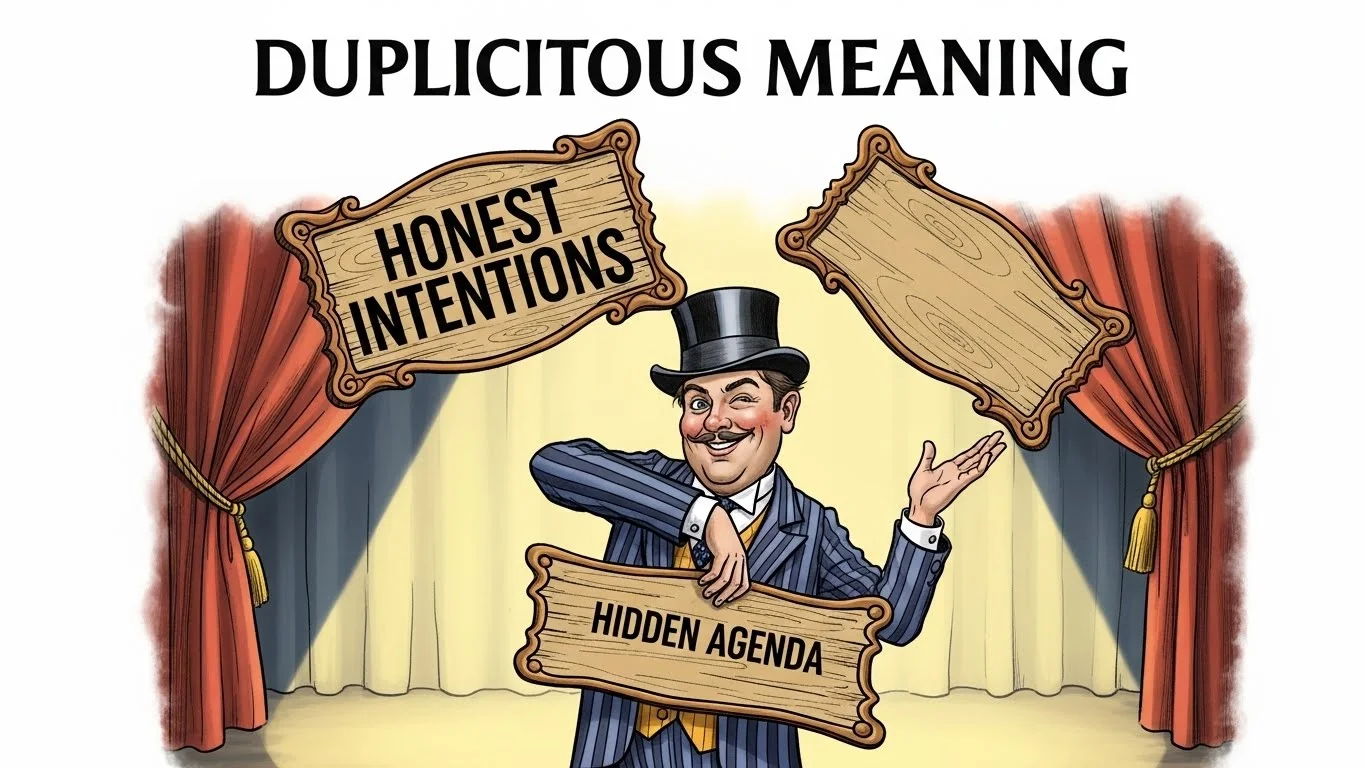
Common Mistakes & Misunderstandings
Thinking duplicitous means “confused”
It does not. Duplicitous behavior is intentional.
Using it for small white lies
White lies lack the strategic deception implied by duplicitous.
Mixing it up with “duplicated”
These words sound similar but are unrelated in meaning.
Duplicitous Meaning in Relationships
In relationships, duplicitous behavior often includes:
Saying one thing but feeling another
Secretly breaking trust
Acting loyal while being disloyal
This behavior damages trust because it creates emotional uncertainty.
Duplicitous Meaning in the Workplace
At work, being duplicitous can look like:
Agreeing publicly, resisting privately
Taking credit while pretending to support teamwork
Sharing selective information
Because of this, the word often appears in performance reviews or serious discussions.
Duplicitous Meaning in Online & Social Media Culture
In online spaces, duplicitous is often used to describe:
Fake apologies
Performative activism
Influencers hiding motives
Public virtue signaling with private contradictions
The term has grown more common as audiences analyze intent more critically.
Emotional Tone of the Word “Duplicitous”
The word carries a strongly negative tone.
It often signals:
Betrayal
Disappointment
Loss of trust
Calling someone duplicitous is more serious than calling them dishonest.
When It’s Appropriate to Use “Duplicitous”
Appropriate:
In thoughtful criticism
In formal writing or analysis
When intent is clear
Less appropriate:
Casual jokes
Situations without evidence
Emotional arguments without clarity
Because it’s a strong word, accuracy matters.

Related Words You Might See
If you’re researching duplicitous meaning, you may also encounter:
Hypocritical
Disingenuous
Two-faced
Underhanded
Insincere
These words overlap but don’t fully replace duplicitous.