
What Does “Lymphadenopathy” Mean?
Lymphadenopathy means abnormal swelling or enlargement of lymph nodes.
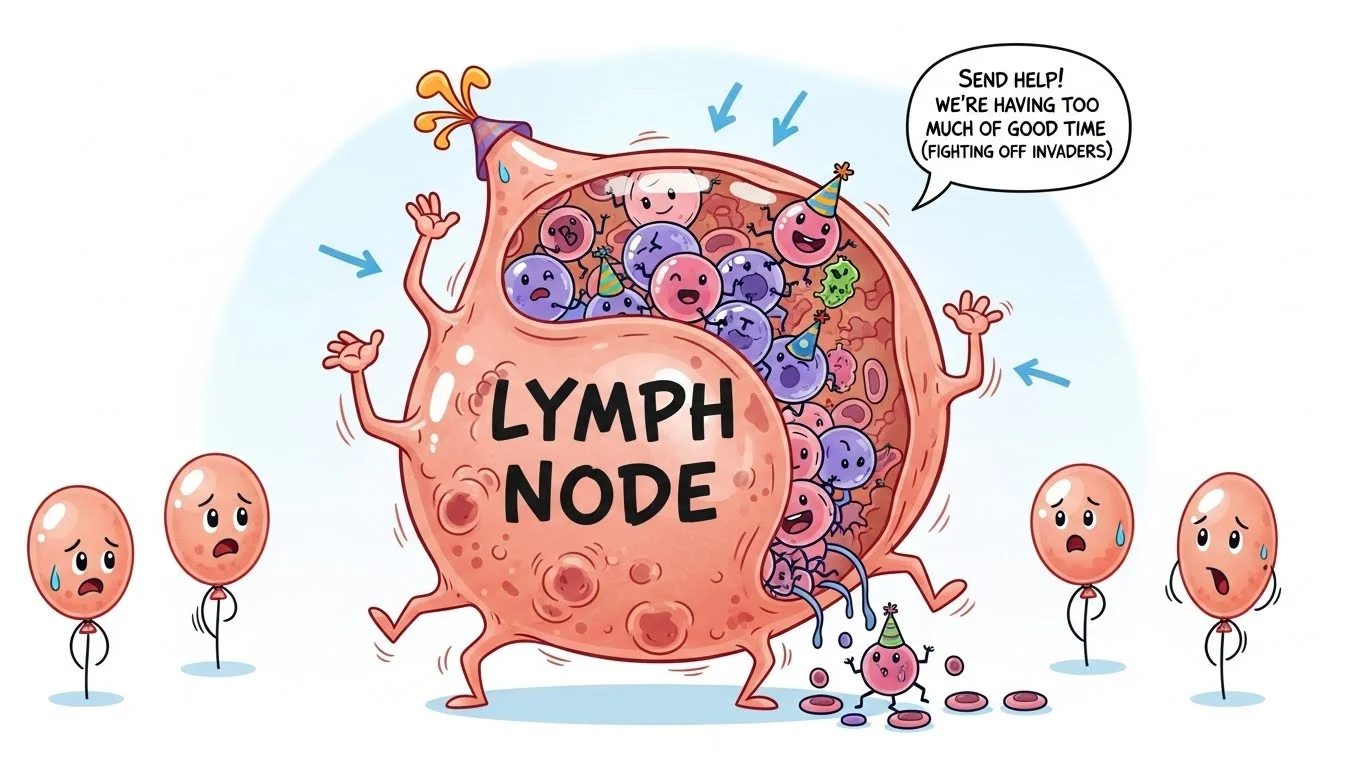
Lymph nodes are small, bean-shaped structures found throughout the body. They are part of the immune system and help fight infections.
When doctors use the term lymphadenopathy, they are describing a physical finding, not a diagnosis by itself.
In simple terms:
Lymphadenopathy = swollen lymph nodes
It is a sign, not a disease
Lymphadenopathy Meaning in Simple Words
In everyday language, lymphadenopathy means:
Your lymph nodes are bigger than normal
Your immune system is reacting to something
Most people first notice lymphadenopathy as:
A lump in the neck
Swelling under the jaw
A tender area in the armpit or groin
What Are Lymph Nodes and Why Do They Swell?
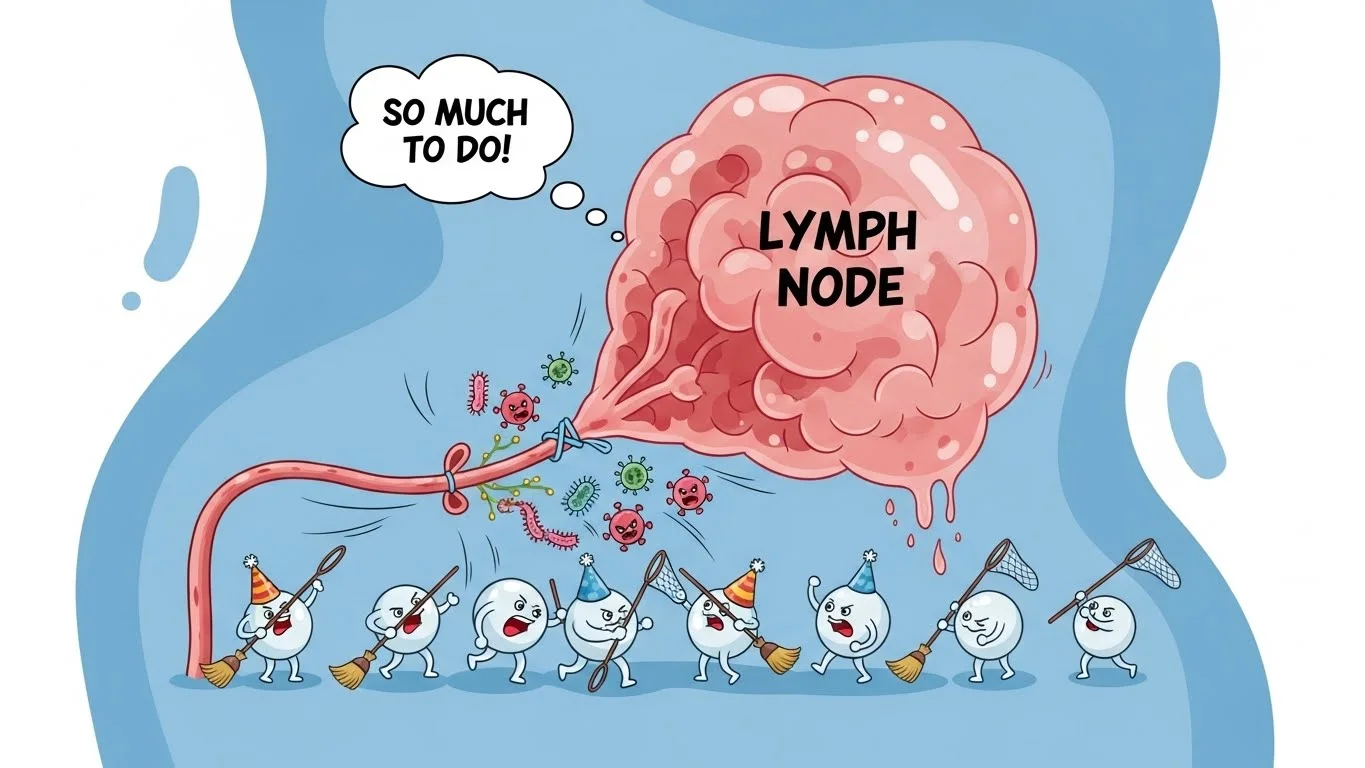
Lymph nodes act like filters in the body. They trap:
Bacteria
Viruses
Abnormal cells
When your immune system is active, lymph nodes may:
Increase in size
Become tender
Feel firm or rubbery
This reaction is often normal and temporary.
Common Causes of Lymphadenopathy
The causes of lymphadenopathy range from mild to serious. The most common causes include:
Infections
Colds and flu
Throat infections
Ear infections
Dental infections
Viral illnesses
Inflammatory Conditions
Autoimmune diseases
Chronic inflammation
Medications
Certain vaccines
Some prescription drugs
Cancers (less common)
Lymphoma
Leukemia
Metastatic cancers
Most cases are benign and infection-related, especially in younger people.
Types of Lymphadenopathy
Doctors classify lymphadenopathy based on location and spread.
Localized Lymphadenopathy
Swelling in one area only
Common in infections near that region
Example:
Swollen neck nodes during a sore throat.
Generalized Lymphadenopathy
Swelling in multiple areas
May indicate systemic conditions
Example:
Swollen nodes in neck, armpits, and groin.
Lymphadenopathy Meaning by Location
The location of swollen lymph nodes often provides clues.
Neck (Cervical)
Common with colds and throat infections
Armpit (Axillary)
Infections in the arm or breast area
Groin (Inguinal)
Infections in the legs or lower body
Chest or Abdomen
Usually detected through imaging
May require further testing
Symptoms That Often Appear with Lymphadenopathy
Lymphadenopathy may occur alone or with other symptoms, such as:
Fever
Fatigue
Sore throat
Weight loss
Night sweats
The combination of symptoms helps doctors determine the cause.
When Lymphadenopathy Is Usually Harmless
In many cases, lymphadenopathy is temporary and harmless, especially when:
Nodes are soft and movable
Swelling appears during illness
Nodes shrink after recovery
Pain or tenderness is present
This often indicates an active immune response.
When Lymphadenopathy Needs Medical Attention
You should seek medical advice if:
Swelling lasts longer than 2–4 weeks
Nodes are hard, fixed, or painless
Rapid growth occurs
Unexplained weight loss or fever is present
These signs don’t always mean something serious, but they do require evaluation.
How Doctors Evaluate Lymphadenopathy
Doctors may use several steps to assess lymphadenopathy:
Physical examination
Blood tests
Imaging (ultrasound, CT scan)
Biopsy (in rare cases)
The goal is to identify the underlying cause, not just treat the swelling.
Lymphadenopathy Meaning in Medical Reports
On lab reports or imaging results, lymphadenopathy simply means:
Enlarged lymph nodes were observed
It does not automatically mean cancer.
Doctors look at:
Size
Shape
Location
Duration
Before making conclusions.
Common Misunderstandings About Lymphadenopathy
Assuming it always means cancer
This is the most common fear, but it’s rarely the case.
Thinking it’s a disease itself
Lymphadenopathy is a sign, not a diagnosis.
Ignoring persistent swelling
While often harmless, long-lasting swelling should be checked.
Lymphadenopathy vs Similar Medical Terms
Understanding related terms can help reduce confusion.
Lymphadenitis: Inflamed or infected lymph nodes
Lymphedema: Fluid buildup causing swelling
Lymphoma: Cancer of the lymphatic system
Each term has a distinct meaning and should not be confused.
Lymphadenopathy in Children vs Adults
In Children
Very common
Usually infection-related
Often resolves on its own
In Adults
Still commonly benign
Persistent swelling is monitored more closely
Age and medical history matter when evaluating lymphadenopathy.
Why Lymphadenopathy Is Common in 2026
In 2026, lymphadenopathy is frequently noted because:
Increased health screenings
Better imaging technology
Higher awareness of immune responses
Many findings are detected earlier and monitored carefully.
Related Medical Terms You May See
If you’re researching lymphadenopathy meaning, you may also encounter:
Immune response
Inflammation
Swollen glands
Reactive lymph nodes
These terms often appear together in medical discussions.