


What Does “Organization” Mean?
At its most basic level, organization means arranging people, tasks, or things in a structured and purposeful way.
The meaning of organization depends on how it’s used:
General meaning: Order, structure, and planning
Business meaning: A company, institution, or formal group
Personal meaning: Keeping things tidy, planned, and manageable
In all cases, organization is about making things work better together.
Organization Meaning in Simple Terms
If we explain organization in everyday language, it means:
Putting things in the right place
Having a clear system
Knowing who does what and when
Whether it’s a desk, a team, or a global company, organization helps reduce confusion and increase efficiency.
Organization Meaning in Business and Workplaces
In professional settings, organization refers to a structured group created to achieve specific goals.
Examples include:
Companies
Schools and universities
Hospitals
Government offices
Nonprofit groups
A business organization usually includes:
Defined roles
Leadership or management
Rules and processes
Shared objectives
Without organization, workplaces become chaotic and unproductive.
Organization Meaning in Daily Life
Organization isn’t only about companies. In daily life, it often means personal organization.
This includes:
Planning your day
Managing time effectively
Keeping physical and digital spaces orderly
For example, someone might say:
“She’s very organized,” meaning she plans well and stays on top of responsibilities.
Organization Meaning in Education
In schools and learning environments, organization refers to:
Structured teaching systems
Clear schedules
Organized study habits
Students who understand organization often perform better because they:
Manage deadlines well
Keep notes structured
Follow routines
Here, organization directly affects learning outcomes.
Different Types of Organization
There are several common types of organization, depending on context:
Formal organization: Companies, institutions, official groups
Informal organization: Social groups, communities, friend circles
Personal organization: Time, tasks, habits, space
Digital organization: Files, emails, apps, cloud storage
Each type serves the same core purpose: creating order and clarity.

Why Organization Is Important
Understanding the organization meaning matters because organization helps:
Save time
Reduce stress
Improve productivity
Avoid mistakes
Achieve goals more efficiently
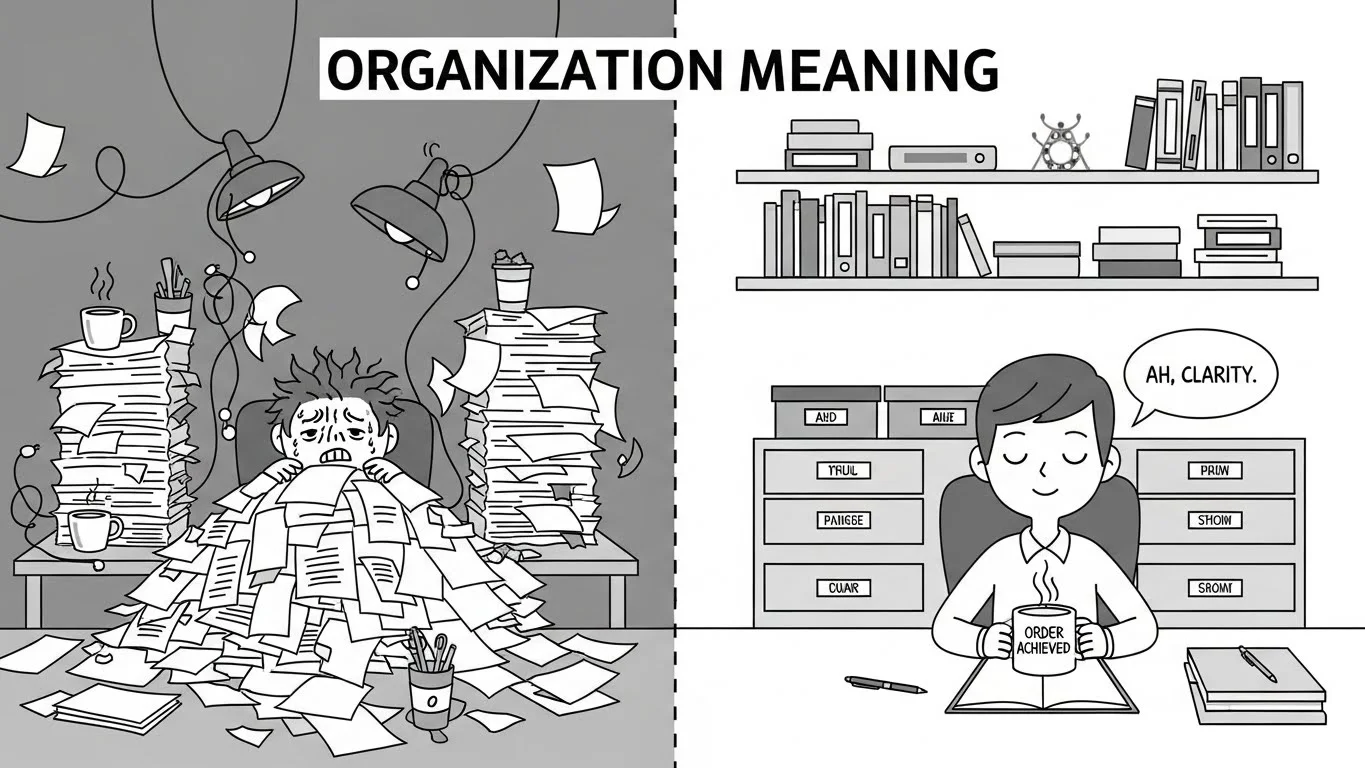
In both personal and professional life, lack of organization often leads to confusion and burnout.
Real-Life Examples of Organization
Example 1:
“The event was successful because of good organization.”
Explanation: Everything was planned and managed well.
Example 2:
“She works for an international organization.”
Explanation: A formal group with a global mission.
Example 3:
“I need better organization in my schedule.”
Explanation: Poor time management.
Example 4:
“This app helps with digital organization.”
Explanation: Arranging files and tasks efficiently.
Organization vs Related Words
Many people confuse organization with similar terms. Here’s how they differ:
Organization: Structure and system
Management: Directing people and tasks
Administration: Handling rules and operations
Planning: Deciding actions in advance
Organization supports all of these but is not the same thing.
Common Mistakes & Misunderstandings
Thinking organization only means companies
Organization also applies to habits, time, and personal life.
Confusing organization with cleanliness
Being organized doesn’t always mean being neat—it means being systematic.
Assuming organization is natural
Organization is a learned skill, not just a personality trait.
Psychological Meaning of Organization
From a psychological perspective, organization is linked to:
Mental clarity
Reduced anxiety
Better decision-making
People who stay organized often feel more in control and confident.
Organization Meaning in Modern Digital Life
In 2026, digital organization is more important than ever.
This includes:
Email folders
File naming systems
Task management apps
Calendar planning
Poor digital organization can slow work just as much as physical clutter.
Organization in Social and Community Contexts
In communities, organization means:
Coordinated effort
Clear leadership
Shared responsibility
Social organizations rely on structure to create impact and maintain trust.
Related Terms You Might See
If you’re researching organization meaning, you may also encounter:
Structure
System
Institution
Coordination
Efficiency
These terms often appear in similar discussions.