
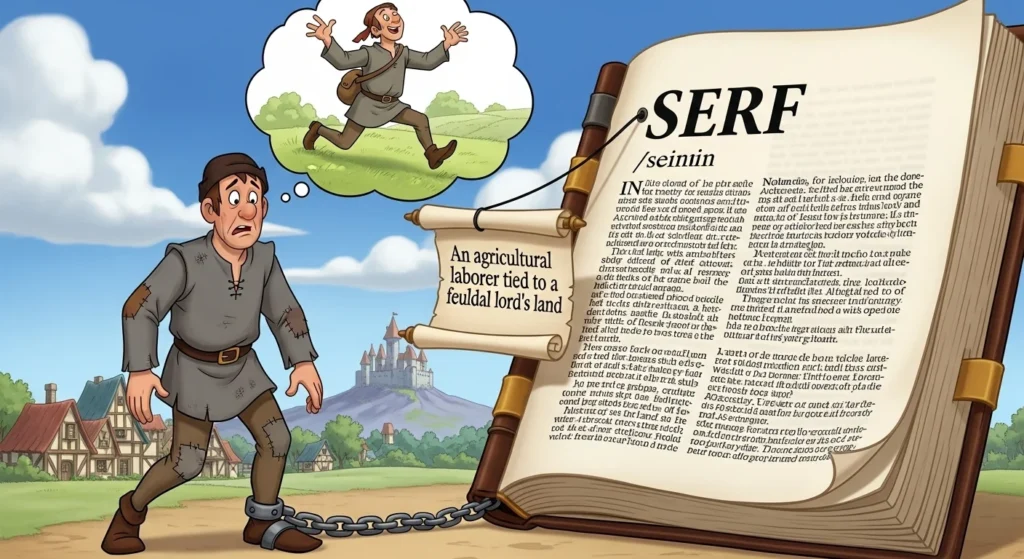
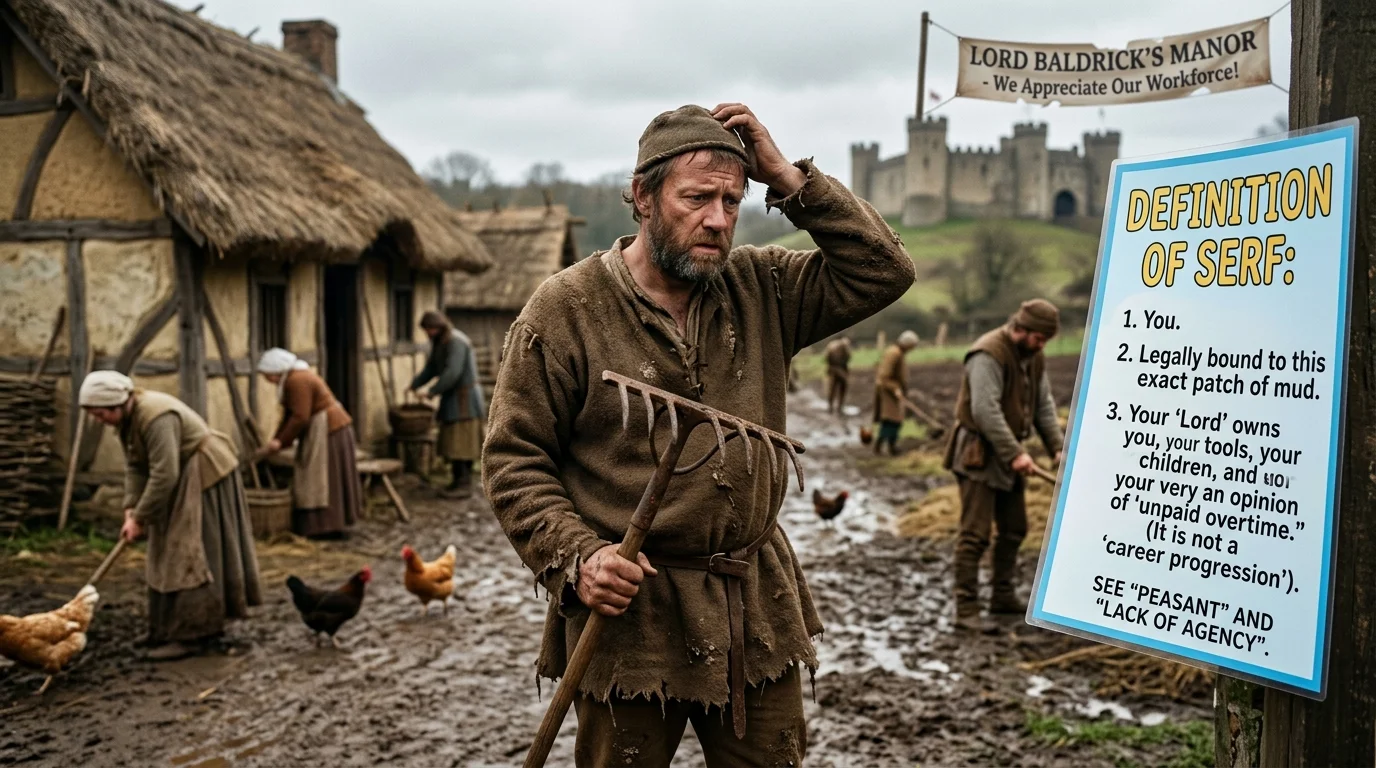
A serf meaning was a worker in medieval society who was tied to a lord’s land under the feudal system. Serfs mainly worked in farming and agriculture, providing labor and crops in exchange for protection and a place to live. Although they were not slaves, they had limited freedom and could not easily leave the land they worked on.
Serfdom played an important role in the economy and social structure of medieval Europe. The term is often connected with peasants, farming communities, and feudal history. Understanding the meaning of serfs and serfdom helps explain how people lived, worked, and were organized in historical societies.

Table of Contents
ToggleSerf Meaning in English
- A farm worker bound to land
- A laborer serving a landowner
- A person with limited freedom in medieval times
- Agricultural worker under feudal system
- Worker tied to a lord’s estate
- Medieval servant farmer
- Person obligated to work for a noble
- Rural laborer in feudal society
- Lower-class worker in history
- Semi-free worker under feudal rule
Serf Synonym
- Peasant
- Laborer
- Farmworker
- Tenant farmer
- Bondman
- Vassal
- Worker
- Servant
- Agricultural laborer
- Feudal worker
Serf Meaning in History
- A worker in medieval Europe
- Part of the feudal system
- Bound to a lord’s land
- Worked farms for protection and shelter
- Had limited personal freedom
- Could not freely leave the estate
- Provided labor and crops to nobles
- Important part of medieval economy
- Lower social class in feudal society
- Historical agricultural labor system
Serfdom Meaning
- A system where workers were tied to land
- Medieval labor system
- Lack of full personal freedom
- Feudal agricultural structure
- Condition of being a serf
- Obligation to serve landowners
- Historical social hierarchy
- Farming under noble control
- Economic dependence on landlords
- Restricted social status in feudal times
Serf vs Peasant
- Serfs were legally tied to land
- Peasants were general rural workers
- All serfs were peasants, but not all peasants were serfs
- Serfs had fewer freedoms
- Peasants could sometimes own land
- Serfs worked directly under feudal obligations
- Peasants had varying social status
- Serfdom involved legal restrictions
- Both worked in agriculture
- Both were part of medieval lower classes
Serf Meaning for Kids
- A farmer in old times
- Someone who worked on a lord’s land
- A person with limited freedom
- Medieval farm worker
- Worker who could not easily leave the land
- Part of castles and kingdoms history
- Someone who grew food for nobles
- Historical village worker
- Poor worker in medieval society
- A helper in farming communities long ago
Serf Meaning in Arabic
- قِنّ
- فلاح تابع للأرض
- عامل زراعي في النظام الإقطاعي
- خادم أرض
- مزارع مرتبط بسيد إقطاعي
- شخص محدود الحرية
- عامل ريفي قديم
- تابع للنبلاء في العصور الوسطى
- مزارع تحت الحكم الإقطاعي
- طبقة عاملة تاريخية
Serf Meaning Peasant
- A serf is a type of peasant
- Rural agricultural worker
- Lower-class medieval farmer
- Worker serving landowners
- Farming laborer under feudal rule
- Peasant with restricted freedom
- Historical countryside worker
- Person dependent on a noble
- Agricultural servant in history
- Member of medieval working class

Serf Meaning in Simple Words 2026
The serf meaning is a farmer or laborer who was legally tied to land owned by a lord.
In simple terms, a serf:
Worked on a lord’s land
Could not freely leave or change jobs
Gave labor or crops in exchange for protection
Serfs were not slaves, but they were not free.
Who Were Serfs in History 2026
Historically, serfs were:
Common in medieval Europe
Part of the feudal system
Born into their status in most cases
Their lives were controlled by landowners called lords.
What Is Serfdom 2026
Serfdom refers to:
The system in which serfs lived and worked
Legal and social obligations tied to land
A long-term arrangement lasting centuries
Serfdom ended gradually as societies modernized.
Serf Meaning vs Slave Meaning 2026
Serf: Tied to land, had limited rights
Slave: Owned as property, had no rights
Serfs could not be sold individually, unlike slaves.
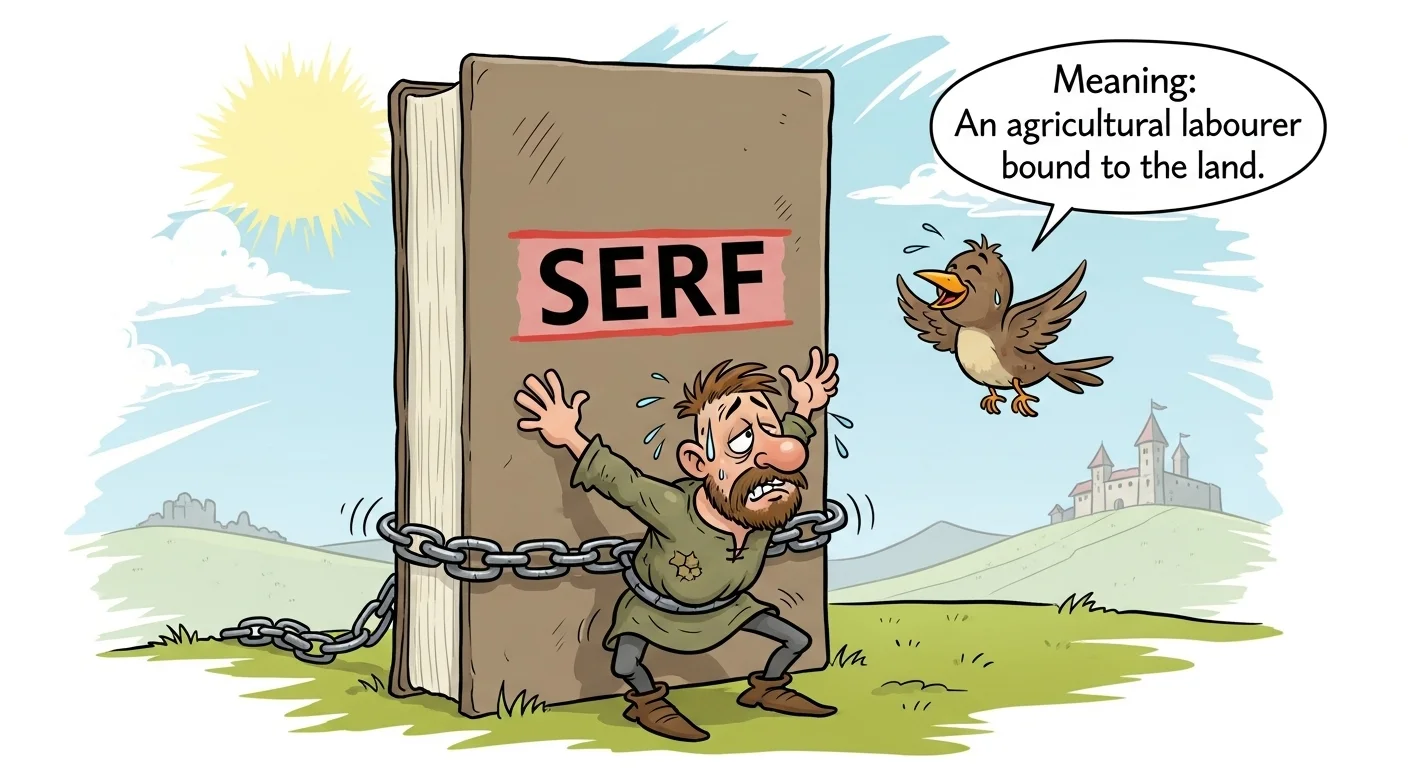
Serf Meaning in Modern Language 2026
Today, serf is sometimes used metaphorically to mean:
Someone with little freedom or control
A person stuck in an unfair system
Example: “He felt like a serf in his workplace.”
Why Understanding Serf Meaning Matters 2026
Knowing the meaning of serf helps you:
Understand medieval history
Read historical texts accurately
Recognize metaphorical usage in modern language
It improves historical and cultural literacy.
Common Misunderstandings About Serfs 2026
Common mistakes include:
Thinking serfs were slaves
Believing serfs could freely leave land
Assuming serfdom existed everywhere
Serfdom varied by region and time period.
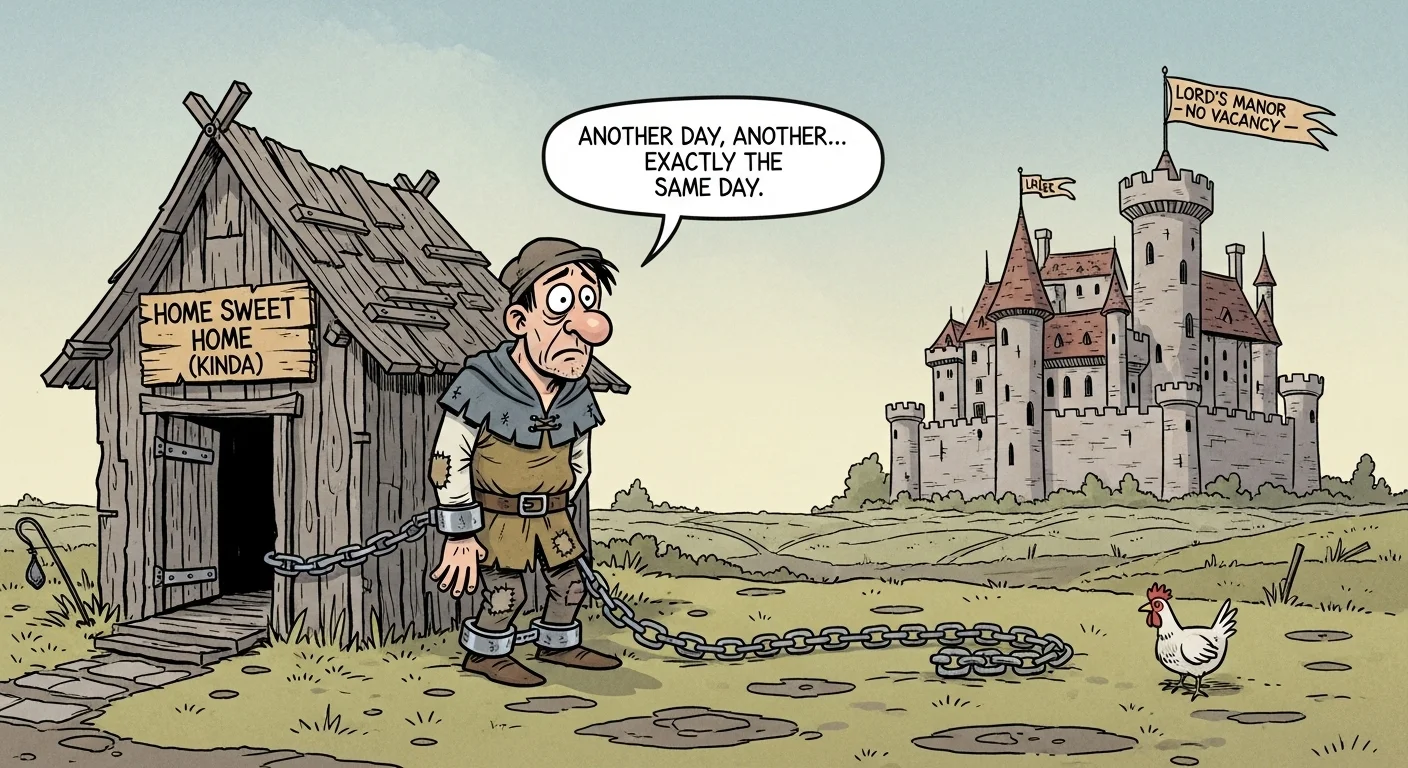
Serf Meaning in Example Sentences 2026
Examples include:
“The serf worked the land owned by the lord.”
“Serfs owed labor and crops as rent.”
“The novel compares modern workers to medieval serfs.”
Frequently Asked Questions
What does serf mean in simple terms?
A serf was a farmer tied to land owned by a lord.
Were serfs slaves?
No, serfs were not owned as property, but they lacked freedom.
Could serfs leave their land?
Usually no, unless granted permission by the lord.
Does serf still exist today?
No, serfdom has been abolished, but the word is used metaphorically.
Where did serfdom exist?
Mainly in medieval Europe, especially during the feudal period.
Conclusion
The serf meaning refers to a laborer tied to land under the feudal system. In 2026, the term remains important for understanding history and is sometimes used metaphorically to describe lack of freedom. Knowing what a serf was helps clarify both historical and modern references.